Argument of a Complex Number
 Argument of a non-zero complex number p(z) is denoted and defined by arg (z)= angle which OP makes with the positive direction of real axis.
If OP=|z| and arg (z)= θ, then obviously z=r (cos θ + i sin θ), called the polar form of z. 'Argument of z' would mean principal argument of z (i.e., argument lying in (-∏,∏ )) unless the context requires otherwise. Thus argument of a complex number z=a+ib = r (cos θ + i sin θ) is the value of θ satisfying r cos θ = a and r sin θ = b.
Let θ = tan-1 |b/a|
(i) a>0, b>0
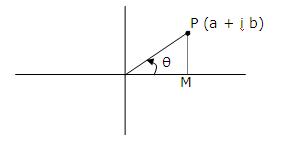
P.V. arg z= θ
(ii) a>0, b>0
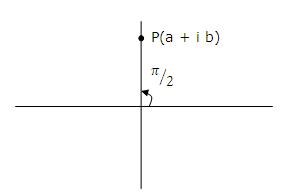
P.V. arg z = ∏/2
(iii) a<0, b>0
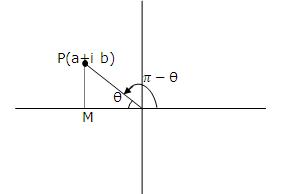
P.V. arg ∏ - θ
Argument of a non-zero complex number p(z) is denoted and defined by arg (z)= angle which OP makes with the positive direction of real axis.
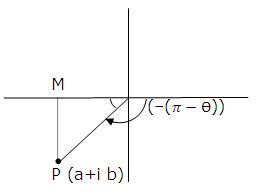
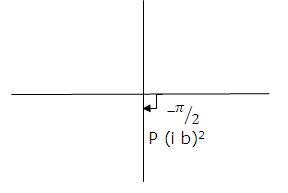
If OP=|z| and arg (z)= θ, then obviously z=r (cos θ + i sin θ), called the polar form of z. 'Argument of z' would mean principal argument of z (i.e., argument lying in (-∏,∏ )) unless the context requires otherwise. Thus argument of a complex number z=a+ib = r (cos θ + i sin θ) is the value of θ satisfying r cos θ = a and r sin θ = b.
Let θ = tan-1 |b/a|
(i) a>0, b>0
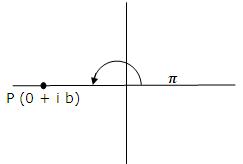
P.V. arg z= θ
(ii) a>0, b>0
P.V. arg z = ∏/2
(iii) a<0, b>0
P.V. arg ∏ - θ
(vii) a>0, b<0
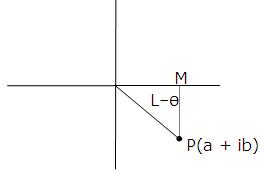
P.V. arg z=-θ
(viii) a>0, b=0
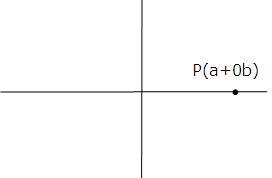
P.V. arg z = 0
To read more, Buy study materials of Complex Numbers comprising study notes, revision notes, video lectures, previous year solved questions etc. Also browse for more study materials on Mathematics here.
View courses by askIITians


Design classes One-on-One in your own way with Top IITians/Medical Professionals
Click Here Know More

Complete Self Study Package designed by Industry Leading Experts
Click Here Know More

Live 1-1 coding classes to unleash the Creator in your Child
Click Here Know More