Dear student,
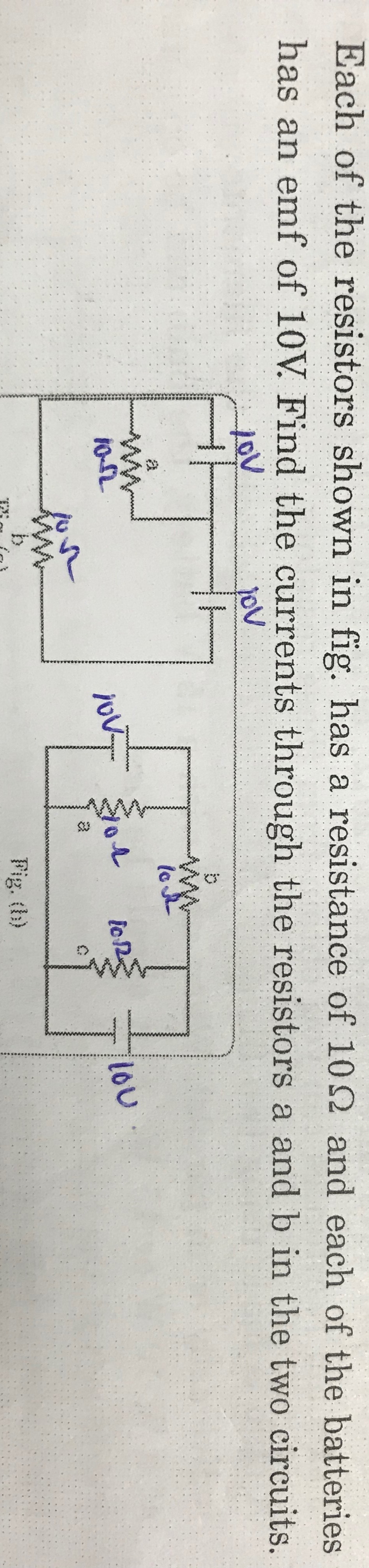
In the first case, resistor a has its ends connected a 10V battery. Hence current flowing through it is 1A.
Resistor b has its end connected to two batteries connected in reverse, and hence there is no net potential difference and so no current flows throught the resistor.
In the second case, ends of each of resistors a and c are connected to a 10V battery and so 1A current flows through both of them. Keeping the lowermost horizontal wire as reference, both the ends of resistor b has 10V higher potential due to the two batteries and therefore, no net potential difference, resulting in no current flowing through the resistor.