

Grade 12Electrostatics
why electron doesn’t fall down positively charged nuecleus?
why electron doesn’t fall down positively charged nuecleus?


 Approved Tutor Answer11 Months ago
That's a fascinating question! The behavior of electrons around a positively charged nucleus is a fundamental concept in atomic physics and quantum mechanics. To understand why electrons don't simply fall into the nucleus, we need to delve into a few key principles of atomic structure and quantum theory.
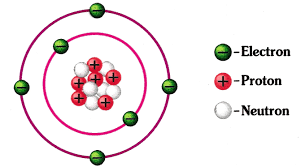
First, let's consider the basic structure of an atom. At the center, we have the nucleus, which is made up of protons and neutrons. Protons carry a positive charge, while neutrons are neutral. Surrounding the nucleus are electrons, which have a negative charge. The attraction between the positively charged nucleus and negatively charged electrons is what keeps the atom together.
In classical physics, one might think of electrons as tiny particles orbiting the nucleus like planets around the sun. If that were the case, we would expect them to spiral inward due to the attractive force of the nucleus, eventually crashing into it. However, this is not what happens, and the reason lies in the principles of quantum mechanics.
Another important concept is Heisenberg's Uncertainty Principle, which states that we cannot precisely know both the position and momentum of an electron at the same time. If an electron were to fall into the nucleus, its position would be very well-defined, leading to an extremely uncertain momentum. This uncertainty would require an enormous amount of energy, making it highly improbable for the electron to be found within the nucleus.
Electrons occupy stable orbits or energy levels around the nucleus. These orbits are determined by the balance of forces acting on the electron. The attractive force from the nucleus is balanced by the electron's kinetic energy, which keeps it from spiraling inward. The lowest energy state, known as the ground state, is where the electron is most stable and least likely to lose energy and fall into the nucleus.
Think of it like a roller coaster. The roller coaster car (the electron) is designed to stay on the track (the energy level) due to the forces acting on it. If it were to lose energy, it might fall off the track, but the design of the roller coaster ensures that it remains in motion along the track, just as electrons remain in their defined energy levels around the nucleus.
In summary, electrons don't fall into the nucleus because of the principles of quantum mechanics, including wave-particle duality, quantized energy levels, and the uncertainty principle. These concepts create a stable environment where electrons can exist in defined orbits around the nucleus without spiraling in. This fascinating interplay of forces and principles is what gives atoms their structure and stability, forming the basis of all matter in the universe.

Last Activity: 3 Years ago
Last Activity: 4 Years ago
Last Activity: 4 Years ago
Last Activity: 4 Years ago