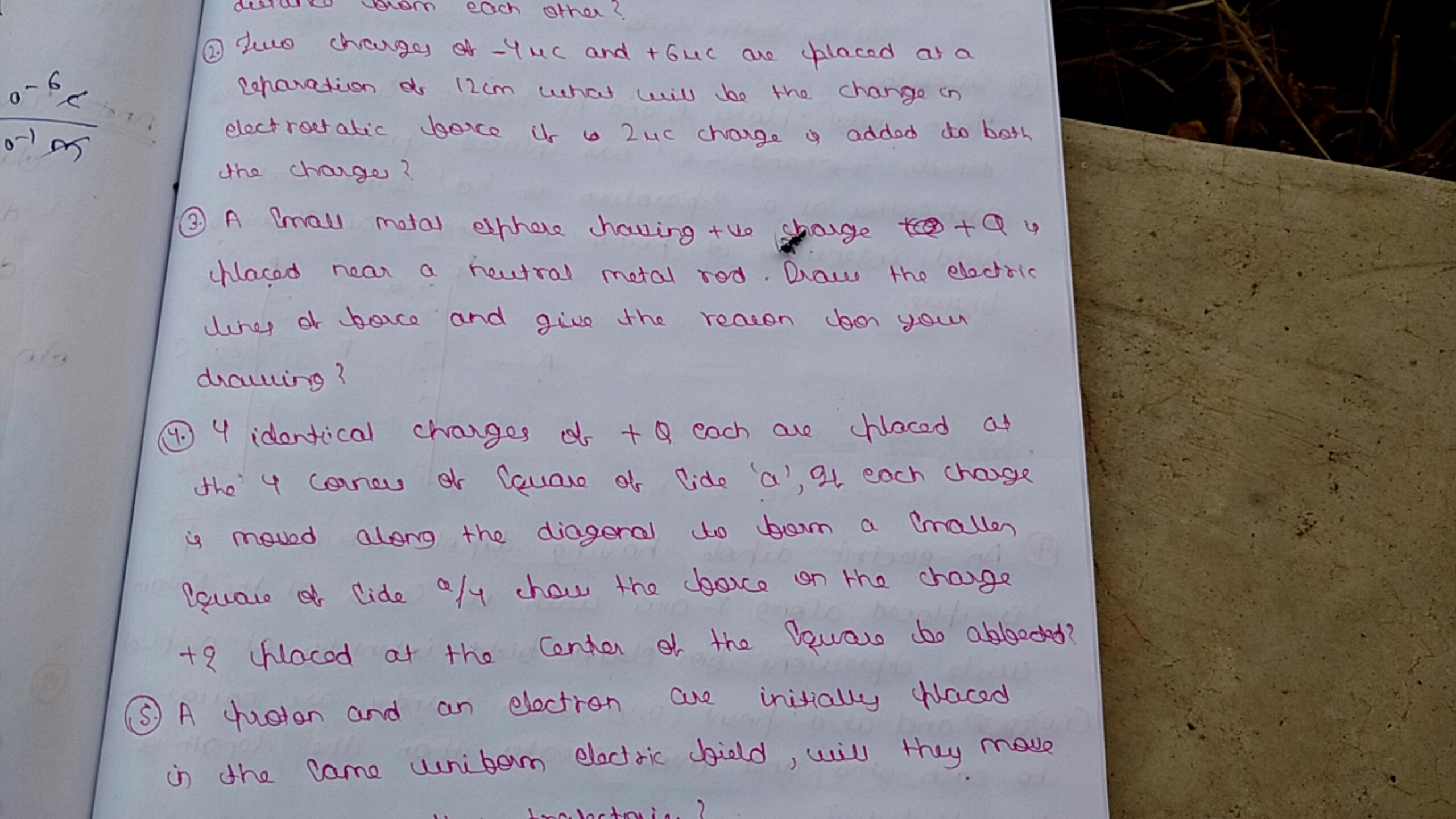
It sounds like you're feeling a bit overwhelmed with your homework, particularly questions 3 and 4. Let's break them down together and clarify any confusion you might have. If you can share the specific topics or concepts these questions are related to, I can provide a more tailored explanation. For now, I'll give you a general approach to tackling challenging homework questions.
Breaking Down the Questions
When faced with difficult questions, it’s helpful to dissect them into smaller parts. Here’s a step-by-step method you can use:
1. Identify Key Concepts
Start by pinpointing the main ideas or concepts that the questions are addressing. For instance, if question 3 is about a specific mathematical theorem, write down what you know about that theorem. If question 4 involves a historical event, list the key facts related to that event.
2. Gather Relevant Information
Once you know the key concepts, gather any relevant information from your notes, textbooks, or online resources. This could include definitions, formulas, or historical timelines. Make sure you understand how these pieces of information connect to the questions.
3. Formulate Your Answers
With the information at hand, start drafting your answers. Here’s how you can structure them:
- Question 3: Begin with a clear statement of the answer, followed by supporting details or examples. If it’s a math problem, show your work step-by-step.
- Question 4: Provide context for your answer. Explain why the event or concept is significant and how it relates to the broader subject matter.
Example Application
Let’s say question 3 is about the Pythagorean theorem. You might start with:
The Pythagorean theorem states that in a right triangle, the square of the length of the hypotenuse is equal to the sum of the squares of the lengths of the other two sides. Then, you could provide an example using a triangle with sides of lengths 3 and 4, showing that:
3² + 4² = 9 + 16 = 25, and √25 = 5, which is the length of the hypotenuse.
For question 4, if it’s about the causes of World War I, you might say:
The assassination of Archduke Franz Ferdinand in 1914 was a key event that triggered the war, but underlying causes included nationalism, militarism, and alliances among European powers. You could elaborate on each cause, providing examples of how they contributed to the conflict.
Final Thoughts
By breaking down the questions and systematically addressing each part, you can clarify your understanding and formulate well-reasoned answers. If you provide the specific content of questions 3 and 4, I can help you with more detailed explanations or examples tailored to those questions. Remember, the goal is to understand the material, not just to complete the homework!