

Grade 12Electrostatics
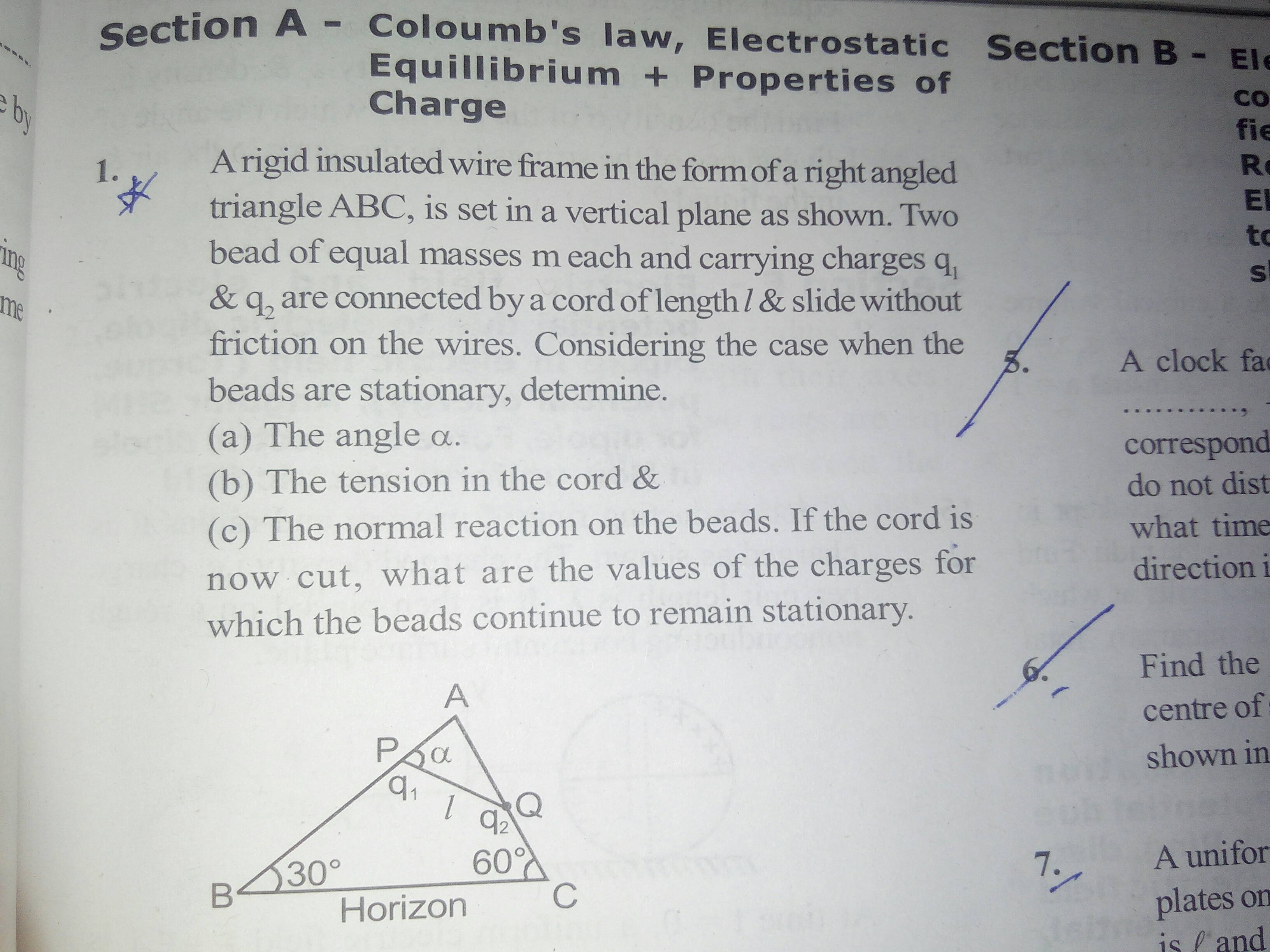
good morning sir please explain this problemand problem is given in the picture please explain it fast
good morning sir please explain this problemand problem is given in the picture please explain it fast


 Approved Tutor Answer1 Year ago
Good morning! I’d be happy to help you with the problem you’re facing. Since I can’t see the picture you mentioned, I’ll guide you through a general approach to solving problems, which you can apply to your specific situation. If you can describe the problem or share the key details, I can provide a more tailored explanation.
When tackling any problem, it’s essential to break it down into manageable parts. Here’s a step-by-step approach you can follow:
Start by pinpointing what the problem is asking. Look for important numbers, variables, or conditions that are provided. For example, if it’s a math problem, identify the operations involved (addition, subtraction, multiplication, etc.).
Next, think about how the different elements of the problem relate to each other. Are there any formulas or concepts that apply? For instance, if it’s a physics problem, consider the laws of motion or energy conservation.
Once you have a grasp of the elements and their relationships, outline a plan for how to approach the solution. This could involve setting up equations, drawing diagrams, or listing steps to follow.
Now, put your plan into action. Carefully work through the calculations or logical steps you’ve outlined. It’s crucial to stay organized and check your work as you go to avoid mistakes.
After arriving at a solution, take a moment to review your work. Does your answer make sense in the context of the problem? If possible, try to verify it by plugging it back into the original scenario.
Let’s say the problem involves calculating the area of a rectangle. Here’s how you might apply the steps:
By following these steps, you can systematically approach and solve a variety of problems. If you can provide more details about the specific problem you’re facing, I’d be glad to help you work through it together!

Last Activity: 3 Years ago
Last Activity: 4 Years ago
Last Activity: 4 Years ago
Last Activity: 4 Years ago