

Grade 8Physical Chemistry
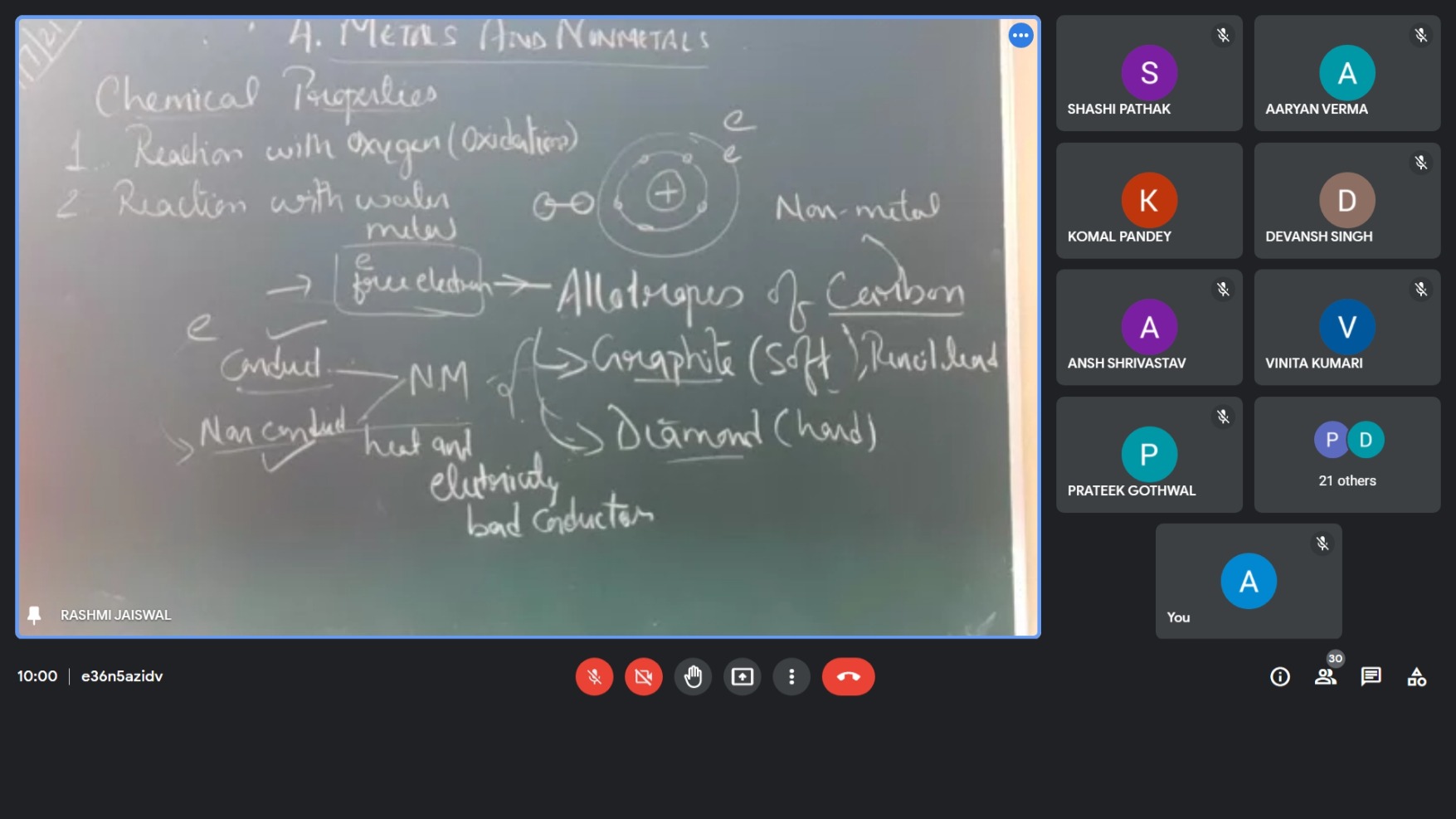
What this ma’am of science ch no. 4 non metals and metals chapter full explaination
What this ma’am of science ch no. 4 non metals and metals chapter full explaination


 Approved Tutor Answer1 Year ago
In the chapter on metals and non-metals, we delve into the fundamental differences between these two categories of elements, their properties, and their significance in various applications. Understanding these distinctions is crucial for grasping the basics of chemistry and how elements interact in the world around us.
Metals and non-metals are two primary classifications of elements found on the periodic table. Metals are typically characterized by their shiny appearance, good conductivity of heat and electricity, malleability, and ductility. In contrast, non-metals exhibit a range of properties that often include dullness, poor conductivity, and brittleness.
Metals and non-metals also differ significantly in their reactivity. Metals tend to lose electrons during chemical reactions, forming positive ions. For example, sodium (a metal) reacts with chlorine (a non-metal) to form sodium chloride (table salt). On the other hand, non-metals often gain electrons, forming negative ions or sharing electrons to create covalent bonds.
Consider the reaction between magnesium (a metal) and oxygen (a non-metal). Magnesium burns in oxygen to form magnesium oxide, a compound that illustrates how metals and non-metals can combine to form new substances:
The distinction between metals and non-metals is not just academic; it has practical implications in our everyday lives. Metals are widely used in construction, electronics, and transportation due to their strength and conductivity. Non-metals, such as carbon, nitrogen, and oxygen, are essential for life and are found in various compounds that are crucial for biological processes.
In summary, the chapter on metals and non-metals provides a comprehensive overview of their properties, reactivity, and applications. By understanding these elements, we gain insight into the fundamental building blocks of matter and their roles in both nature and technology. This knowledge is essential for further studies in chemistry and related fields.

Last Activity: 3 Years ago
Last Activity: 3 Years ago
Last Activity: 3 Years ago
Last Activity: 4 Years ago