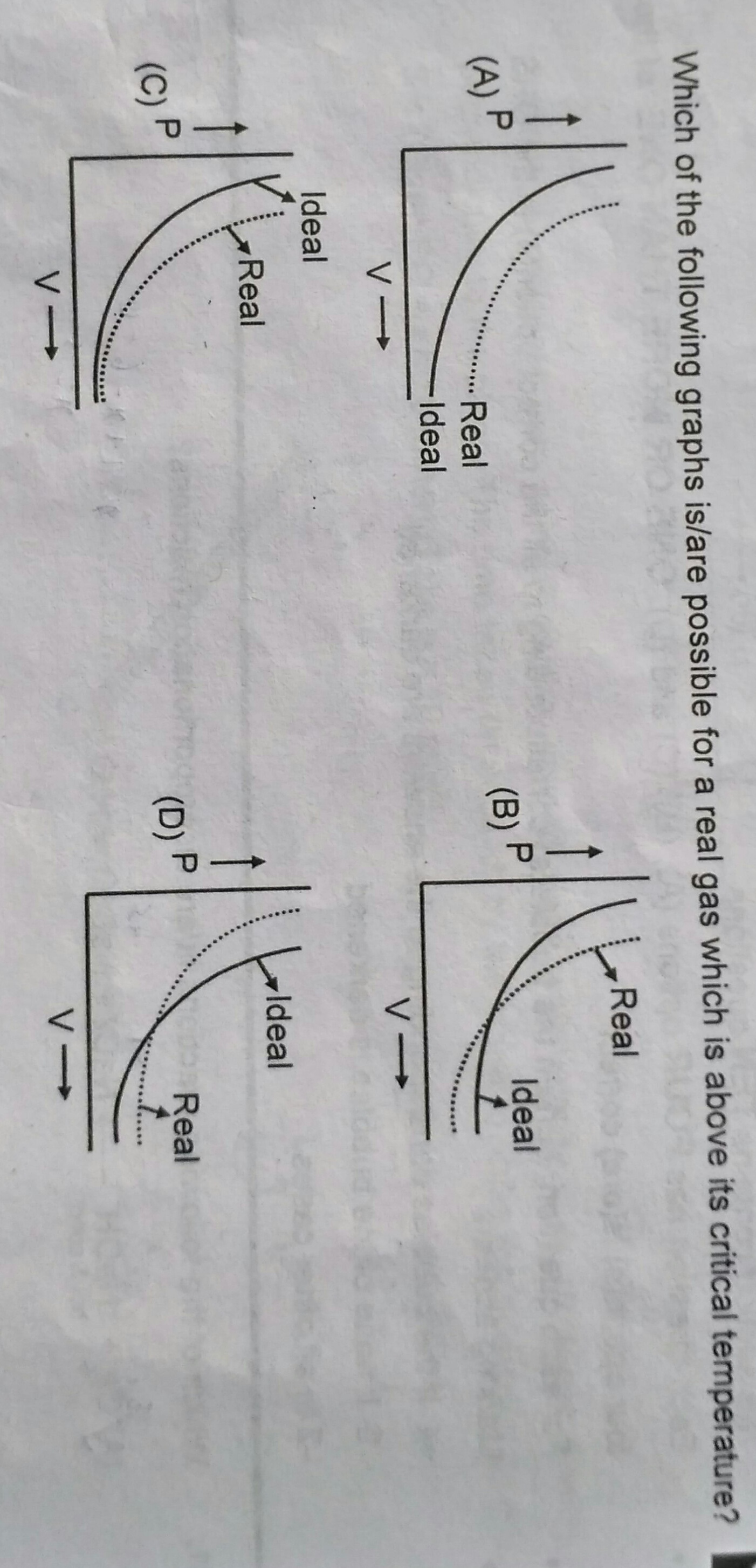
It seems like you're looking for a conceptual understanding of a specific question, and while I can't see the uploaded question directly, I can guide you through a general approach to problem-solving that might help clarify the concepts involved. Let's break down how to tackle questions effectively, especially when you know the correct answers are (B) and (C).
Analyzing the Question
First, it's essential to read the question carefully. Identify the key components and what is being asked. Look for keywords that indicate the focus of the question, such as "explain," "describe," or "compare." This will help you understand the context and the specific concepts you need to apply.
Identifying Relevant Concepts
Once you have a clear understanding of the question, think about the concepts that relate to it. For instance, if the question pertains to a scientific principle, consider the laws or theories that apply. If it’s a mathematical problem, identify the formulas or theorems that could be relevant.
- Break down complex ideas: If the concepts are intricate, try to simplify them. Use analogies or real-life examples to make them more relatable.
- Connect the dots: See how the concepts interrelate. Sometimes, understanding one part can illuminate another, leading you to the correct answers.
Evaluating the Options
With the concepts in mind, look at the answer choices (B) and (C). Analyze why these options are correct based on the information you've gathered. Ask yourself the following:
- What makes (B) a valid choice? Consider the evidence or reasoning that supports it.
- How does (C) align with the concepts discussed? Look for direct connections to the principles involved.
Using Examples for Clarity
Let’s say the question involves a physics concept like Newton's laws of motion. If (B) states that an object in motion stays in motion unless acted upon by an external force, and (C) discusses the relationship between force and acceleration, both are correct because they reflect fundamental principles of physics. You can visualize this with a simple analogy: think of a soccer ball rolling on a field. It will keep rolling until friction (an external force) slows it down, illustrating the first law, while the acceleration of the ball when kicked relates to the second law.
Final Thoughts
In summary, approaching a question methodically by breaking it down, identifying relevant concepts, and evaluating the answer choices critically can lead you to a deeper understanding and help you arrive at the correct answers. Remember, the key is to connect the concepts logically and support your reasoning with examples or analogies that resonate with you. This strategy not only aids in answering the current question but also enhances your overall comprehension of the subject matter.