

Grade 12Physical Chemistry
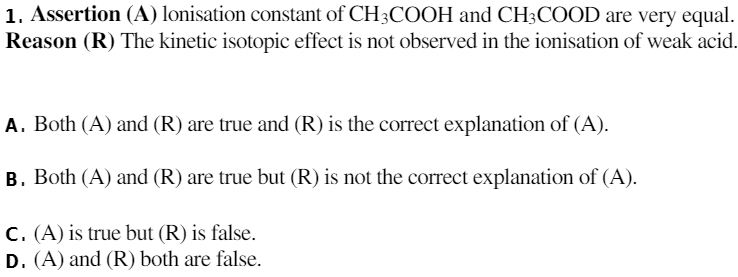
Please answer with reason of choosing the correct option(please explain in detail)
Please answer with reason of choosing the correct option(please explain in detail)


 Approved Tutor Answer0 Years ago
When faced with a multiple-choice question, selecting the correct option often requires a combination of knowledge, critical thinking, and reasoning. Let's break down the process of choosing the right answer step by step, using a hypothetical example to illustrate the reasoning involved.
First, it’s essential to carefully read the question. Identify the key terms and what is being asked. For instance, if the question is about the causes of a historical event, focus on the specific event and the context surrounding it.
Next, examine each option provided. It’s helpful to eliminate choices that are clearly incorrect. For example, if the question is about the causes of World War I and one option mentions events that occurred after the war, you can confidently discard that choice.
Now, consider what you know about the topic. Let’s say the remaining options include:
Each of these options could be a valid cause of World War I, but you need to determine which one is most relevant to the question. Reflect on the historical context: nationalism was a significant driving force that contributed to tensions between countries, leading to the war.
To strengthen your reasoning, connect the dots between the question and your knowledge. For instance, you might recall that the assassination of Archduke Franz Ferdinand was fueled by nationalist sentiments, which escalated into a larger conflict. This connection reinforces the idea that nationalism is a critical factor in this context.
After analyzing the options and applying your knowledge, it’s time to make a decision. If you find that option A (Nationalism) aligns best with the historical context and the question’s focus, you can confidently choose it as your answer.
Before finalizing your answer, take a moment to review your reasoning. Ask yourself if there are any other factors or nuances you might have overlooked. In this case, while economic factors and technological advancements played roles in the war, they do not directly address the immediate causes as effectively as nationalism does.
In summary, selecting the correct option involves a systematic approach: understanding the question, analyzing the options, applying relevant knowledge, making connections, and reviewing your choice. This method not only helps in answering multiple-choice questions accurately but also enhances your overall comprehension of the subject matter.

Last Activity: 3 Years ago
Last Activity: 3 Years ago
Last Activity: 3 Years ago
Last Activity: 4 Years ago