

Grade 12Physical Chemistry
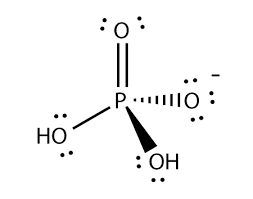
How can the n factor of H2PO4 be 3 ? It only has a maximum 2 replaceable Hydrogen ion , isn't it??
How can the n factor of H2PO4 be 3 ? It only has a maximum 2 replaceable Hydrogen ion , isn't it??


 Approved Tutor Answer1 Year ago
To understand how the n factor of H2PO4 can be 3, we need to delve into the concept of n factor itself and how it relates to the behavior of acids and bases in chemical reactions. The n factor is essentially a measure of the number of moles of replaceable hydrogen ions (H+) or hydroxide ions (OH-) that a substance can donate or accept in a reaction.
H2PO4, known as dihydrogen phosphate, contains two hydrogen ions that can be released in an acid-base reaction. However, the confusion arises when we consider the overall reactivity of the ion in different contexts.
The n factor can vary depending on the reaction type. For H2PO4, while it has two replaceable hydrogen ions, it can also participate in reactions where it acts as a base or an acid. This is where the concept of the n factor being 3 comes into play.
Let’s consider a reaction where H2PO4 is involved in a neutralization reaction with a strong base like NaOH. In this case, H2PO4 can donate its two hydrogen ions to form HPO4^2- and water. If we also consider that H2PO4 can accept a hydrogen ion from a strong acid, we can see how it effectively participates in three distinct reactions:
Thus, in total, H2PO4 can be involved in three different processes, leading to an n factor of 3 in certain contexts.
In summary, while H2PO4 has two replaceable hydrogen ions, its ability to participate in reactions as both an acid and a base allows it to have an n factor of 3 in specific scenarios. This highlights the importance of considering the context of chemical reactions when determining the n factor of a compound.

Last Activity: 3 Years ago
Last Activity: 3 Years ago
Last Activity: 3 Years ago
Last Activity: 4 Years ago