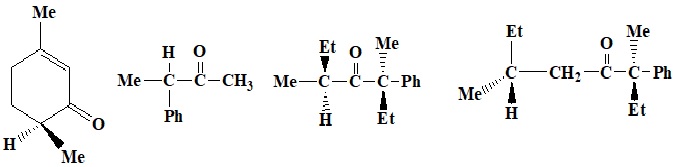
When we talk about racemization in the context of optically active compounds, we're referring to the process where a chiral compound converts into a racemic mixture, which contains equal amounts of both enantiomers. This can happen under certain conditions, such as the addition of an alkali to the solution of an optically active compound. Let's break this down further to understand how and why this occurs.
Understanding Racemization
Racemization typically involves the interconversion of enantiomers, which are molecules that are mirror images of each other. In many cases, this process can be facilitated by the presence of a base (alkali) that can deprotonate a chiral center, leading to the formation of a planar intermediate. This intermediate can then re-protonate from either side, resulting in a mixture of both enantiomers.
Role of Alkali in Racemization
When a few drops of alkali are added to an optically active compound, the alkali can interact with the compound in several ways:
- Deprotonation: The alkali can remove a proton from a chiral center, creating a carbanion or a neutral species that is not chiral.
- Planar Intermediate Formation: The resulting species can adopt a planar configuration, allowing for attack from either side, which leads to the formation of both enantiomers.
- Reprotonation: When the intermediate reverts to a chiral form, it can do so from either side, thus producing a racemic mixture.
Examples of Racemization
Consider a simple example with a chiral alcohol, such as 2-butanol. If we add a strong base like sodium hydroxide (NaOH) to a solution of 2-butanol, the hydroxide ion can deprotonate the alcohol, leading to the formation of a planar alkoxide ion. This ion can then re-protonate from either side, resulting in a mixture of (R)-2-butanol and (S)-2-butanol, effectively racemizing the solution.
Factors Influencing Racemization
Several factors can influence the extent and rate of racemization:
- Concentration of Alkali: Higher concentrations can lead to faster racemization.
- Temperature: Increased temperatures often accelerate chemical reactions, including racemization.
- Nature of the Compound: Some compounds are more prone to racemization than others, depending on their structure and stability of intermediates.
Conclusion
In summary, the addition of a few drops of alkali to a solution of an optically active compound can lead to racemization by facilitating the formation of a planar intermediate that can re-protonate from either side. This process is a fascinating aspect of stereochemistry and highlights the delicate balance of chiral molecules in chemical reactions. Understanding these principles is crucial for applications in pharmaceuticals and organic synthesis, where the activity of enantiomers can differ significantly.