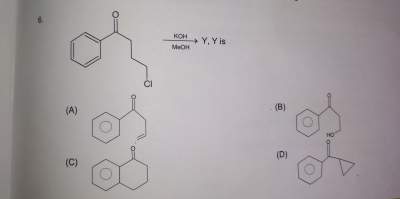
It sounds like you're diving into some interesting organic chemistry concepts! When discussing reactions involving potassium (K) and methanol (MeOH), it's essential to clarify the context and the specific reaction mechanism you're considering. Let's break this down step by step.
Understanding the Reaction Context
In organic chemistry, the reaction of potassium with methanol can lead to different outcomes depending on the conditions and the substrate involved. If you're looking at a situation where potassium is reacting with an alcohol like methanol, you might be considering a scenario involving an alkyl halide or another substrate that can undergo elimination or substitution reactions.
Elimination vs. Substitution Mechanisms
In organic reactions, two primary mechanisms often come into play: elimination (E2) and substitution (SN2). The choice between these mechanisms depends on several factors, including the structure of the substrate, the nature of the leaving group, and the solvent used.
- E2 Mechanism: This is a concerted reaction where a base abstracts a proton while the leaving group departs simultaneously. This typically occurs with strong bases and is favored in more sterically hindered substrates.
- SN2 Mechanism: This involves a nucleophile attacking the substrate and displacing the leaving group in a single step. It is favored in primary substrates and when the nucleophile is strong.
Analyzing the Reaction with Potassium and Methanol
If potassium is used in this reaction, it can act as a strong base, which might lead you to think that an E2 elimination would occur. However, methanol is not a very strong base compared to other alkoxides, and it can also act as a solvent that stabilizes certain intermediates.
Possible Outcomes
When potassium reacts with methanol, you might actually be looking at the formation of potassium methoxide (KOMe) rather than a straightforward elimination reaction. This compound can then participate in further reactions, potentially leading to substitution or elimination depending on the substrate involved.
Why the Answer Differs
If your answer differs from the expected result, it could be due to several reasons:
- The specific substrate you are considering may favor a different pathway.
- The reaction conditions (temperature, concentration, etc.) can influence whether elimination or substitution is favored.
- There might be additional factors at play, such as steric hindrance or the presence of other functional groups that affect the reaction mechanism.
Example Scenario
For instance, if you were reacting potassium with a primary alkyl halide in methanol, you might expect an SN2 reaction to occur rather than E2, especially if the substrate is not highly hindered. Conversely, with a tertiary alkyl halide, E2 might be more favorable due to steric factors.
In summary, while your reasoning for an E2 elimination is valid, the specific conditions and the nature of the substrate can lead to different outcomes. It’s always crucial to consider all aspects of the reaction to determine the most likely mechanism. If you have more details about the specific reaction you’re analyzing, I’d be happy to help clarify further!