

Grade 12th passPhysical Chemistry
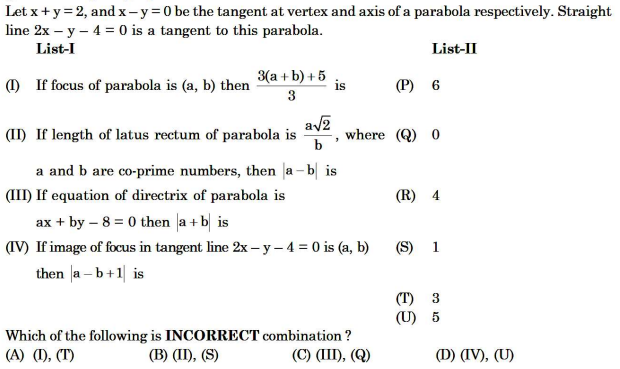
Please answer the qstion through necessary step??Please answer the qstion through necessary step??
Please answer the qstion through necessary step??
Please answer the qstion through necessary step??


 Approved Tutor Answer11 Months ago
To effectively address your question, let's break it down into manageable steps. This approach will help clarify the topic and ensure we cover all necessary aspects comprehensively.
First, it’s essential to pinpoint exactly what you’re asking. This involves understanding the context and the specific details of your question. For example, if your question pertains to a scientific concept, consider what aspect of that concept you need clarification on.
Once the question is clear, the next step is to collect information related to it. This could involve reviewing textbooks, academic articles, or reliable online resources. For instance, if your question is about photosynthesis, you would look for information on the process, its stages, and its significance in the ecosystem.
With the information at hand, it’s time to analyze it critically. Break down complex ideas into simpler components. Using the photosynthesis example, you might explore the light-dependent reactions and the Calvin cycle separately to understand how they contribute to the overall process.
Now that you have a solid understanding, you can formulate a well-reasoned response. Ensure that your answer addresses the question directly and incorporates the key points you’ve gathered. For instance, you might explain how sunlight, carbon dioxide, and water are essential for photosynthesis, leading to the production of glucose and oxygen.
Finally, it’s crucial to review your response. Check for clarity, coherence, and completeness. Make sure that your answer flows logically and that you haven’t overlooked any important details. If necessary, revise your response to enhance its quality.
Let’s say your question was, “What is photosynthesis and why is it important?” A complete answer would look like this:
By following these steps, you can effectively tackle any question, ensuring that your answers are thorough and well-supported. This method not only aids in understanding but also enhances your ability to communicate complex ideas clearly.

Last Activity: 3 Years ago
Last Activity: 3 Years ago
Last Activity: 3 Years ago
Last Activity: 4 Years ago