Revision Notes on Continuity
- A function f(x) is said to be continuous at x= a if
limx→a- f(x)= limx→a+ f(x)=f(a)
Thus, unlike limits, for continuity it is essential for the function to be defined at that particular point and the limiting value of the function should be equal to f(a).
- The function f(x) will be discontinuous at x =a in either of the following situations:
-
limx→a- f(x) and limx→a+ f(x) exist but are not equal.
-
limx→a- f(x) and limx→a+ f(x) exist and are equal but not equal to f(a).
-
f(a) is not defined.
-
At least one of the limits does not exist.
- If you are required to comment on the continuity of a function, then you may just look for the points on the domain where the function is not defined.
Some important properties of continuous functions:
If the functions f(x) and g(x) are both continuous at x =a then the following results hold true:
-
cf (x) is continuous at x =a where c is any constant.
-
f(x) + g(x) is continuous at x = a.
-
f(x).g(x) is continuous at x= a.
-
f(x)/g(x) is continuous at x= a, provided g(a) ≠ 0.
-
If a function f is continuous in (a, b), it means it is continuous at every point of (a, b).
-
If f is continuous in [a, b] then in addition to being continuous ay every point of domain, f should also be continuous at the end points i.e. f(x) is said to be continuous in the closed interval [a, b] if
-
f(x) is continuous in (a, b)
-
limx→a+ f(x)=f(a)
limx→a- f(x)=f(a)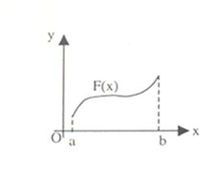
-
While solving problems on continuity, one need not calculate continuity at every point, in fact the elementary knowledge of the function should be used to search the points of discontinuity.
-
In questions like this where a function h is defined as
h(x) = f(x) for a < x < b
g(x) for b < x < c
The functions f and g are continuous in their respective intervals, then the continuity of function h should be checked only at the point x = b as this is the only possible point of discontinuity.
-
If the point ‘a’ is finite, then the necessary and sufficient condition for the function f to be continuous at a is that limx→a- f(x) and limn→a+ f(x) should exist and be equal to f(a).
-
A function continuous on a closed interval [a, b] is necessarily bounded if both a and b are finite. This is not true in case of open interval.
-
If the function u = f(x) is continuous at the point x=a, and the function y=g(u) is continuous at the point u = f(a), then the composite function y=(gof)(x)=g(f(x)) is continuous at the point x=a.
-
Given below is the table of some common functions along with the intervals in which they are continuous:
|
Functions f(x) |
Interval in which f(x) is continuous |
|
Constant C |
(-∞,∞) |
|
bn, n is an integer > 0 |
(-∞,∞) |
|
|x-a| |
(-∞,∞) |
|
x-n, n is a positive integer. |
(-∞,∞)-{0} |
|
a0xn + a1xn-1 +........ + an-1x + an |
(-∞,∞) |
|
p(x)/q(x), p(x) and q(x) are polynomials in x |
R - {x:q(x)=0} |
|
sin x |
R |
|
cos x |
R |
|
tan x |
R-{nπ:n=0,±1,........} |
|
cot x |
R-{(2n-1)π/2:n=0,±1,± 2,........} |
|
sec x |
R-{(2n-1)π/2:n=0,±1,± 2,........} |
|
ex |
R |
|
ln x |
(0, ∞) |
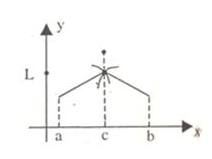
If you know the graph of a function, it can be easily judged without even solving whether a function is continuous or not. The graph below clearly shows that the function is discontinuous.
-
If limx→a- f(x) = L1 and limx→a+ f(x) = L2, where L1 and L2are both finite numbers then it is called discontinuity of first kind or ordinary discontinuity.
-
A function is said to have discontinuity of second kindif neither limx→a+ f(x) nor limx→a- f(x) exist.
-
If any one of limx→a+ f(x) or limx→a- f(x) exists and the other does not then the function f is said to have mixed discontinuity.
-
If limx→a f(x) exists but is not equal to f(a), then f(x) has removable discontinuity at x = a and it can be removed by redefining f(x) at x=a.
-
If limx→a f(x) does not exist, then we can remove this discontinuity so that it becomes a non-removable or essential discontinuity.
-
A function f(x) is said to have a jump discontinuity at a point x=a if, limx→a-f(x) ≠ limx→a+ f(x) and f(x) and may be equal to either of previous limits.
The concepts of limit and continuity are closely related. Whether a function is continuous or not can be determined by the limit of the function.
View courses by askIITians


Design classes One-on-One in your own way with Top IITians/Medical Professionals
Click Here Know More

Complete Self Study Package designed by Industry Leading Experts
Click Here Know More

Live 1-1 coding classes to unleash the Creator in your Child
Click Here Know More