NEET 2025 Analysis
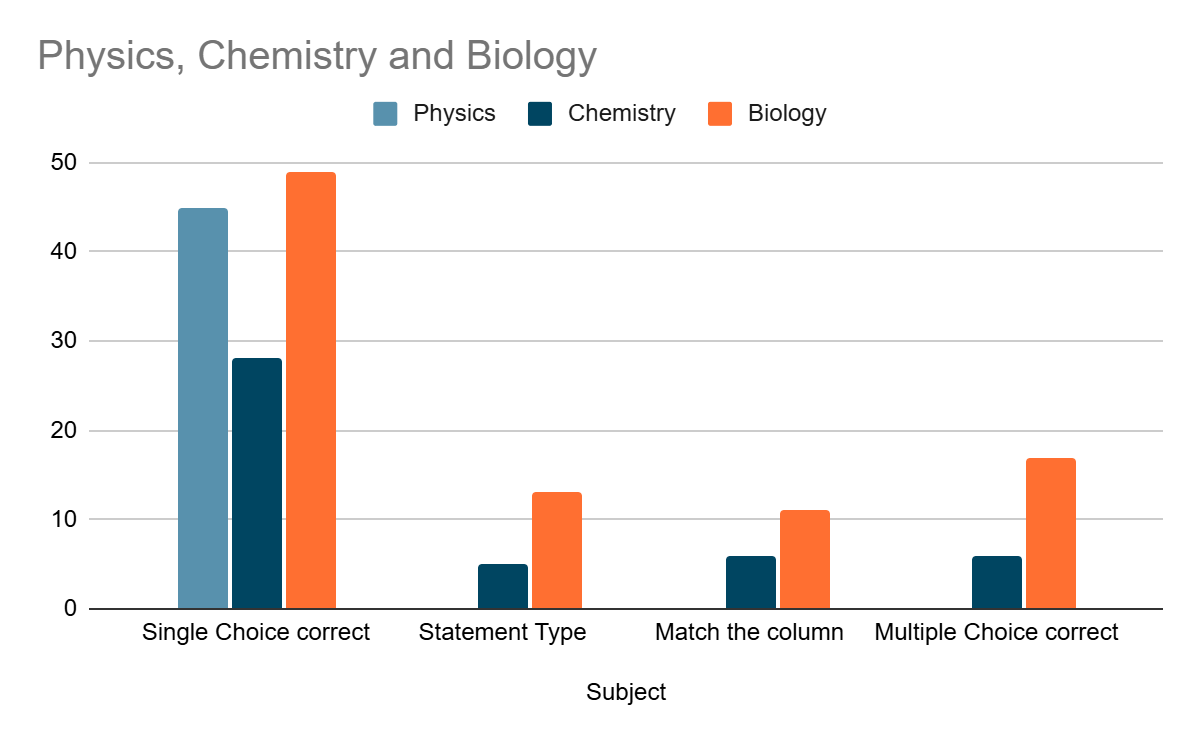
Pattern of Questions:
NEET UG 2025 Paper Pattern |
|||||
|
Subject |
Single Choice Correct |
Statement Type |
Match the Column |
Multiple Choice Correct |
Total Number of Questions |
|
Physics |
45 |
0 |
0 |
0 |
45 |
|
Chemistry |
28 |
5 |
6 |
6 |
45 |
|
Biology |
49 |
13 |
11 |
17 |
90 |
Difficulty Level Analysis
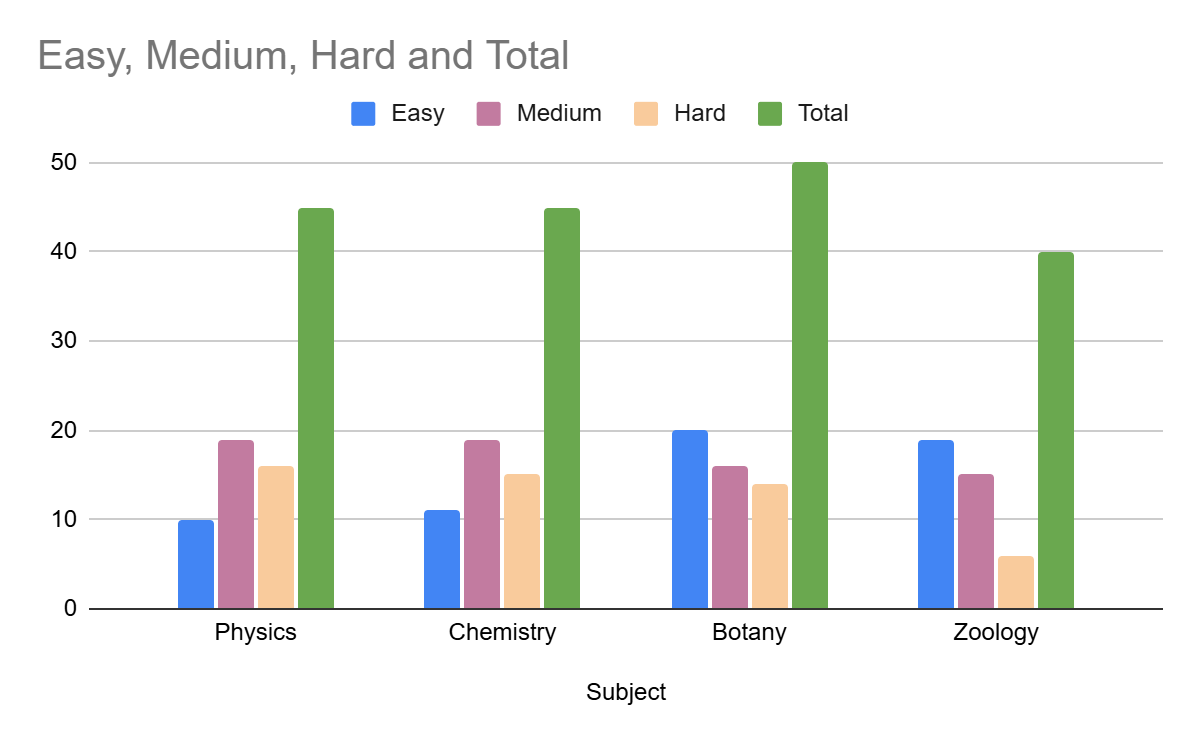
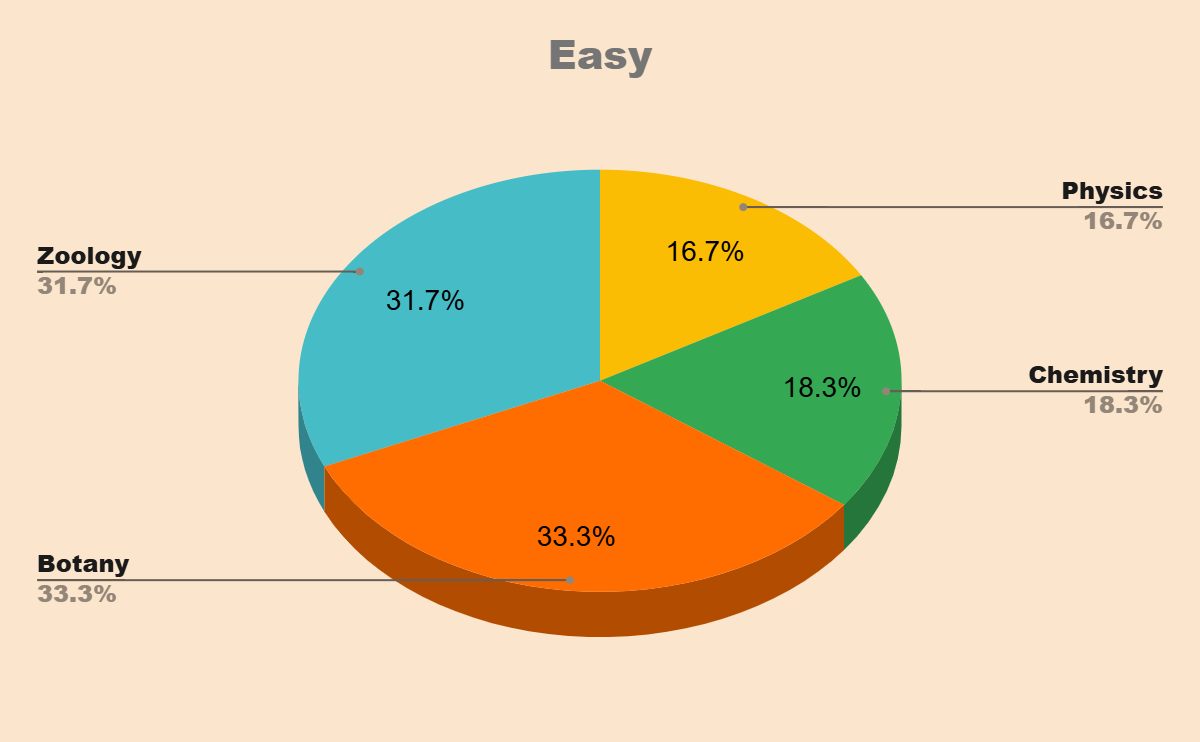
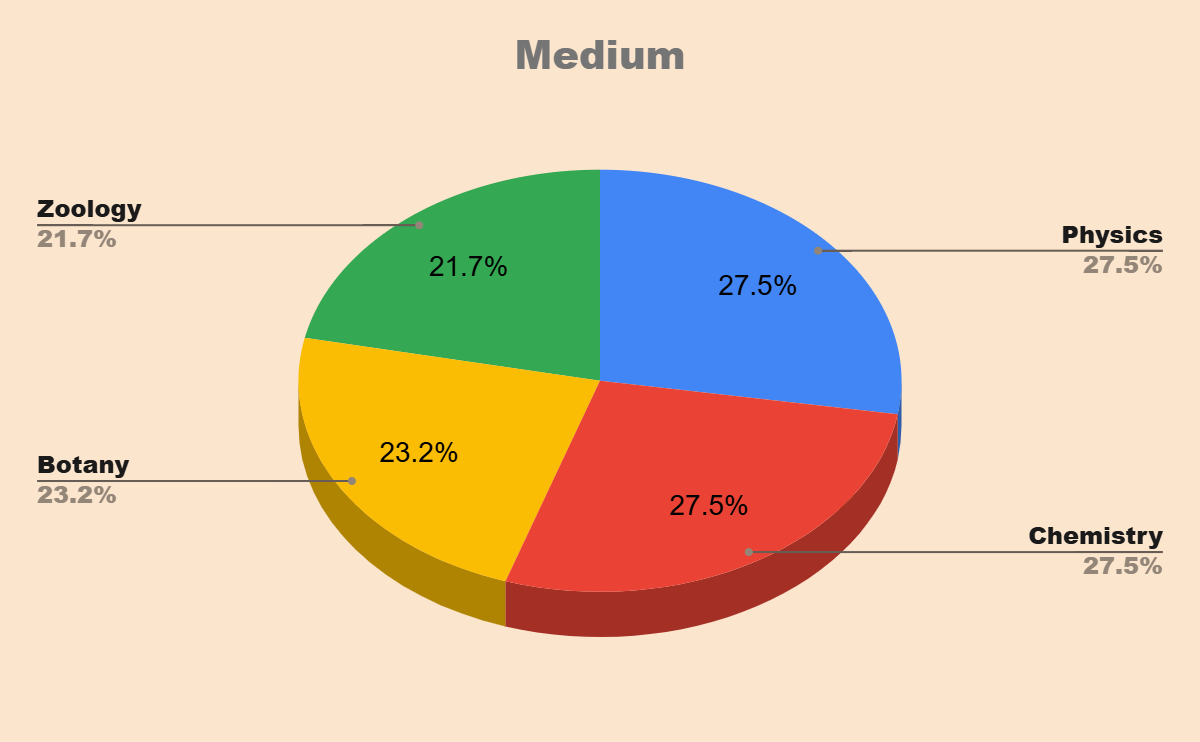
Subject-wise Difficulty Level Analysis |
||||
|
Subject |
Easy |
Medium |
Hard |
Total |
|
Physics |
10 |
19 |
16 |
45 |
|
Chemistry |
11 |
19 |
15 |
45 |
|
Botany |
20 |
16 |
14 |
50 |
|
Zoology |
19 |
15 |
6 |
40 |
|
Overall Difficulty Level |
60 |
69 |
51 |
180 |
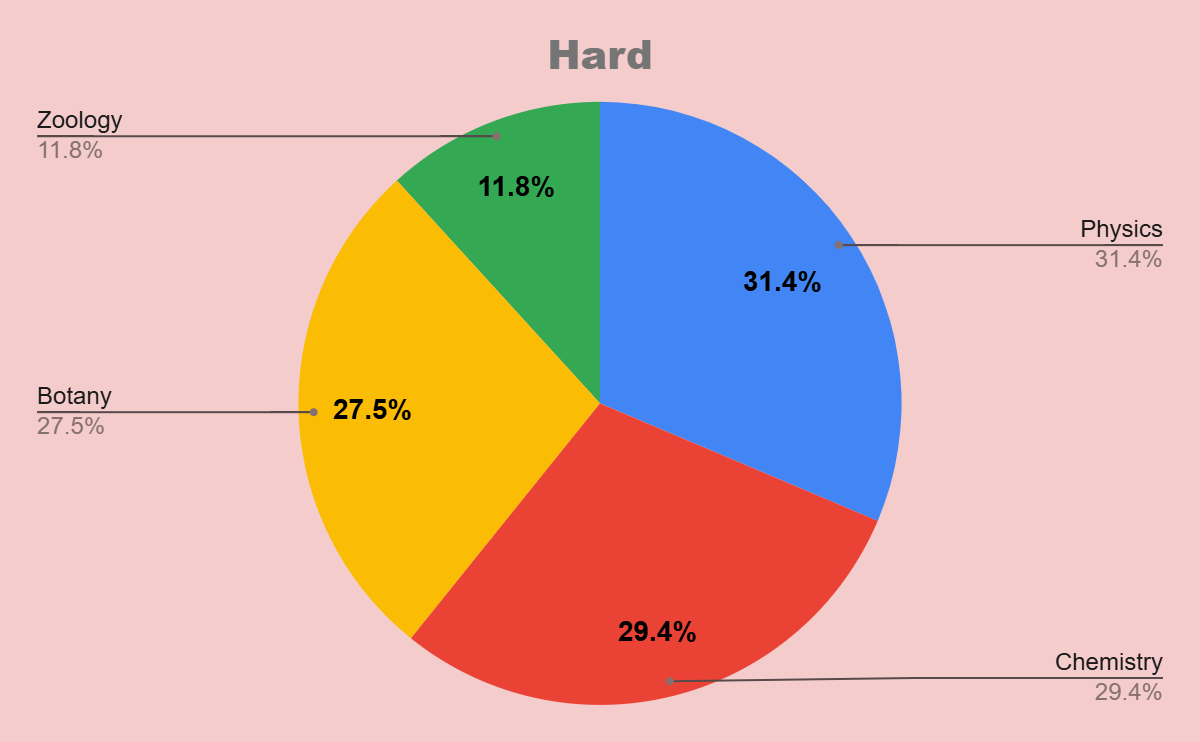
1. Physics – Most Challenging Section
- Difficulty Level: Moderate to High
- Key Observations:
- Emphasis on multi-step problem-solving and application-based questions.
- Significant focus on topics like Modern Physics, Electrodynamics, and Thermodynamics.
- Questions required integration of concepts across multiple chapters, increasing complexity.
- Time-consuming nature led to challenges in time management.
2. Chemistry – Moderate with New Question Types
- Difficulty Level: Moderate
- Key Observations:
- Introduction of multiple correct answer-type questions, a departure from previous patterns.
- Physical Chemistry was calculation-intensive, focusing on Electrochemistry and Thermodynamics.
- Organic Chemistry emphasized reaction mechanisms and named reactions.
- Inorganic Chemistry remained largely NCERT-based but included some unexpected questions.
3. Biology – Lengthy but Manageable
- Difficulty Level: Easy to Moderate
- Key Observations:
- Predominantly theory-based questions, closely aligned with NCERT textbooks.
- Class 12 topics received more emphasis than Class 11.
- Sections like Genetics, Human Physiology, and Ecology had higher weightage.
- While not conceptually difficult, the section was lengthy, posing time management challenges.
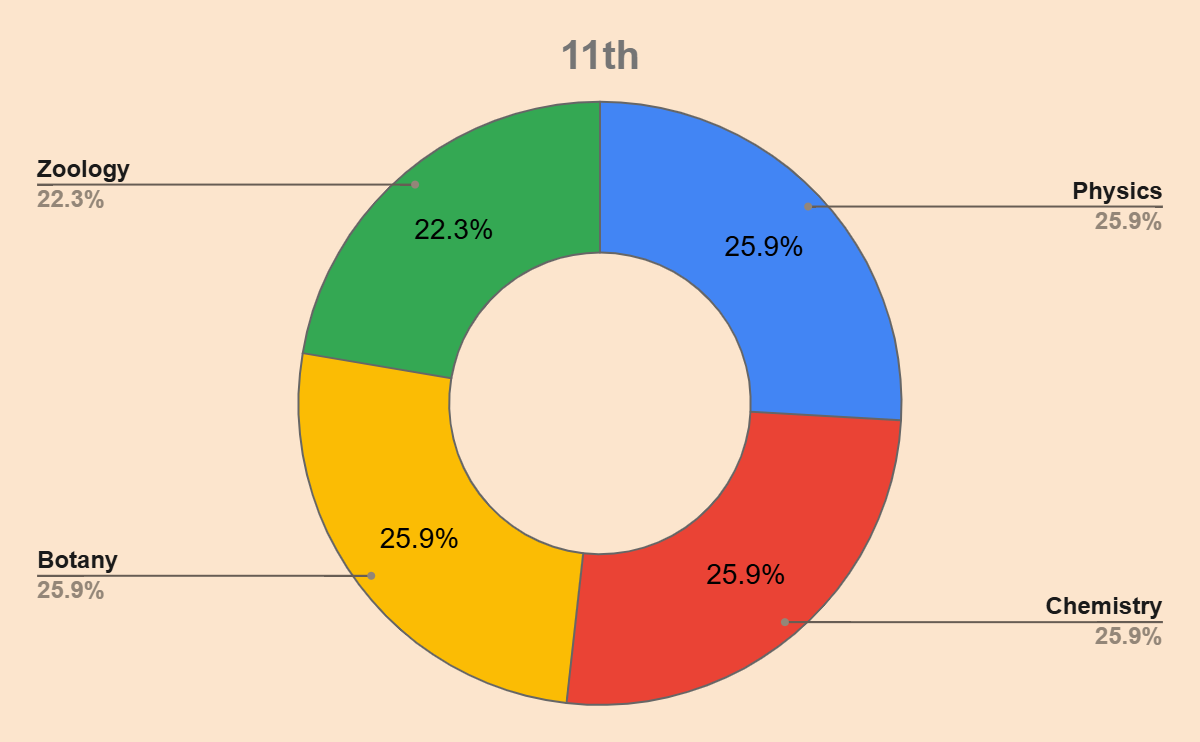
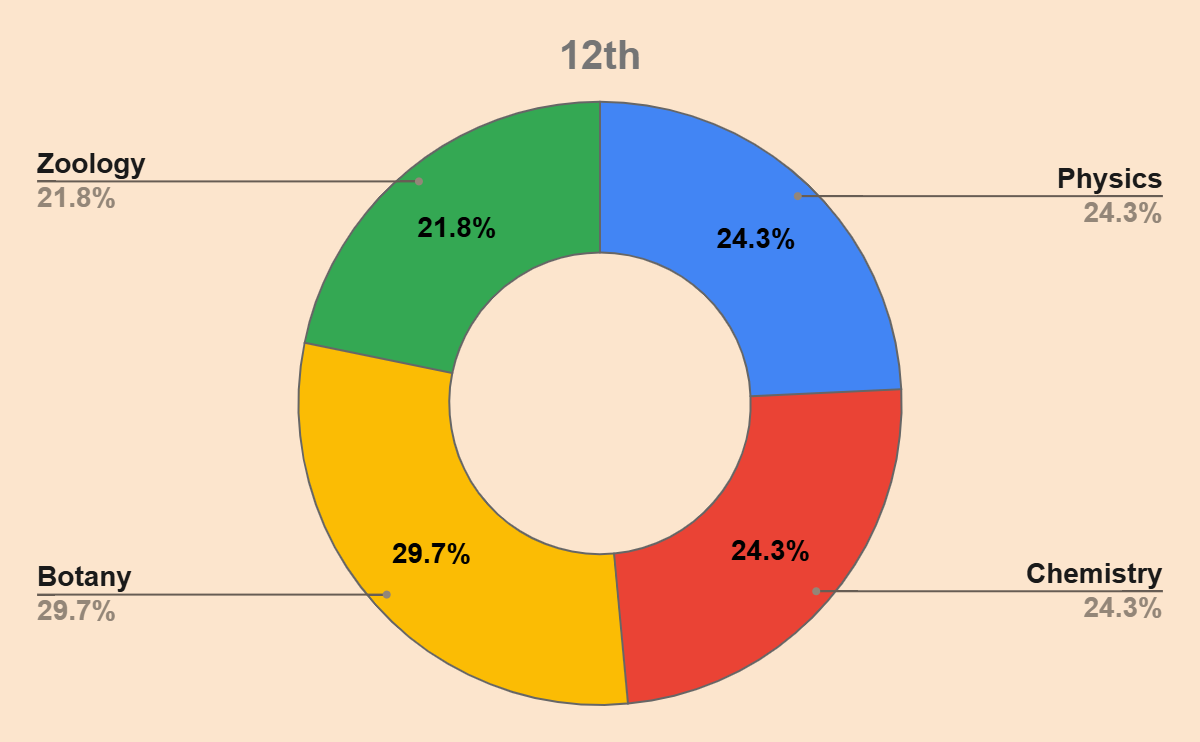
Grade-wise distribution of Questions
|
Subject |
Grade 11th |
Grade 12th |
%age Questions from 11th |
%age Questions from 12th |
|
Physics |
23 |
22 |
51% |
49% |
|
Chemistry |
23 |
22 |
51% |
49% |
|
Botany |
23 |
27 |
51% |
60% |
|
Zoology |
20 |
20 |
44% |
44% |
|
Grade-wise distribution |
89 |
91 |
49 |
51 |

Chapter-wise distribution of Questions
Physics Chapter-wise distribution:
|
Grade |
Chapter |
No. of Questions |
No. of marks allotted |
|
11th |
Mechanical Properties of Fluids |
1 |
04 |
|
11th |
Laws of Motion |
2 |
08 |
|
11th |
Work, Energy and Power |
1 |
04 |
|
11th |
Circular Motion |
2 |
08 |
|
11th |
Center of Mass and System of Particles |
1 |
04 |
|
11th |
Kinetic Theory |
1 |
04 |
|
11th |
Motion in a Straight Line |
2 |
08 |
|
11th |
Rotational Motion |
2 |
08 |
|
11th |
Thermal Properties of Matter |
1 |
04 |
|
11th |
Oscillations |
2 |
08 |
|
11th |
Units and Measurements |
3 |
12 |
|
11th |
Thermodynamics |
2 |
08 |
|
11th |
Gravitation |
2 |
08 |
|
11th |
Waves |
1 |
04 |
|
12th |
Ray Optics and Optical Instruments |
2 |
08 |
|
12th |
Moving Charges and Magnetism |
3 |
12 |
|
12th |
Current Electricity |
3 |
12 |
|
12th |
Semiconductor Electronics: Materials, Devices and Simple Circuits |
2 |
08 |
|
12th |
Electromagnetic Waves |
2 |
08 |
|
12th |
Electromagnetic Induction |
1 |
04 |
|
12th |
Alternating Current |
1 |
04 |
|
12th |
Electrostatic Potential and Capacitance |
2 |
08 |
|
12th |
Wave Optics |
2 |
08 |
|
12th |
Electric Charges and Fields |
1 |
04 |
|
12th |
Atoms |
1 |
04 |
|
12th |
Dual Nature of Radiation and Matter |
2 |
08 |
|
Total |
45 |
180 |
|
Chemistry chapter-wise distribution:
|
Grade |
Chapter |
No. of Questions |
No. of marks allotted |
|
11th |
Structure of Atom |
2 |
08 |
|
11th |
Classification of Elements and Periodicity in Properties |
2 |
08 |
|
11th |
Hydrocarbons |
3 |
12 |
|
11th |
Some Basic Concepts of Chemistry |
2 |
08 |
|
11th |
Redox Reactions |
1 |
04 |
|
11th |
Organic Chemistry: Some Basic Principles and Techniques |
4 |
16 |
|
11th |
Equilibrium |
3 |
12 |
|
11th |
Chemical Bonding and Molecular Structure |
2 |
08 |
|
11th |
Thermodynamics |
2 |
08 |
|
11th |
Biomolecules |
2 |
08 |
|
12th |
Principles of Qualitative Analysis |
1 |
04 |
|
12th |
Coordination Compounds |
4 |
16 |
|
12th |
The p-Block Elements (XII) |
2 |
08 |
|
12th |
Chemical Kinetics |
2 |
08 |
|
12th |
Electrochemistry |
1 |
04 |
|
12th |
Solutions |
3 |
12 |
|
12th |
Amines |
2 |
08 |
|
12th |
Aldehydes, Ketones and Carboxylic Acids |
3 |
12 |
|
12th |
The d and f-Block Elements |
1 |
04 |
|
12th |
Haloalkanes and Haloarenes |
2 |
08 |
|
12th |
Alcohols, Phenols and Ethers |
1 |
04 |
|
Total |
45 |
180 |
|
Botany Chapter-wise distribution:
|
Grade |
Chapter |
No. of Questions |
No. of marks allotted |
|
11th |
Respiration in Plants |
1 |
04 |
|
11th |
The Living World |
1 |
04 |
|
11th |
Cell: The Unit of Life |
4 |
16 |
|
11th |
Morphology of Flowering Plants |
4 |
16 |
|
11th |
Plant Growth and Development |
2 |
08 |
|
11th |
Plant Kingdom |
5 |
20 |
|
11th |
Biological Classification |
2 |
08 |
|
11th |
Anatomy of Flowering Plants |
1 |
04 |
|
11th |
Photosynthesis in Higher Plants |
2 |
08 |
|
11th |
Cell Cycle and Cell Division |
1 |
08 |
|
12th |
Molecular Basis of Inheritance |
7 |
28 |
|
12th |
Organisms and Populations |
2 |
08 |
|
12th |
Biodiversity and Conservation |
2 |
08 |
|
12th |
Ecosystem |
4 |
16 |
|
12th |
Sexual Reproduction in Flowering Plants |
5 |
20 |
|
12th |
Microbes in Human Welfare |
3 |
12 |
|
12th |
Principles of Inheritance and Variation |
4 |
16 |
|
Total |
50 |
200 |
|
Zoology Chapter-wise distribution:
|
Grade |
Chapter |
No. of Questions |
No. of marks allotted |
|
11th |
Body Fluids and Circulation |
2 |
08 |
|
11th |
Excretory Products and their Elimination |
2 |
08 |
|
11th |
Structural Organisation in Animals (Animal Tissues) |
3 |
12 |
|
11th |
Animal Kingdom |
4 |
16 |
|
11th |
Human Reproduction |
4 |
16 |
|
11th |
Biotechnology and its Applications |
4 |
16 |
|
11th |
Human Health and Disease |
4 |
16 |
|
11th |
Evolution |
1 |
04 |
|
12th |
Biotechnology - Principles and Processes |
6 |
24 |
|
12th |
Reproductive Health |
1 |
04 |
|
12th |
Biomolecules |
4 |
16 |
|
12th |
Chemical Coordination and Integration |
5 |
20 |
|
Total |
40 |
160 |
|
Overall Exam Structure & Trends
- Exam Pattern: The exam pattern has shifted to Pre-COVID era format with increased conceptual weightage and lengthy problem-solving, especially in Physics and Chemistry.
- Question Distribution:
- Biology (Botany + Zoology): Highest weightage.
- Chemistry: Moderate weightage.
- Physics: Balanced but concept-heavy.
- Time Management: With the limited time allotment, one must try to prioritise the questions first as per the difficulty level. This helps the student to gain more with the limitations provided in the exam hall.
Student Reactions & Our Insights
- Student Feedback:
- Physics was unanimously deemed the toughest section.
- Chemistry's new question formats caught many off guard.
- Biology, while straightforward, was time-consuming due to lengthy questions.
- Teachers’ Opinions:
- The challenging nature of the Physics section is expected to impact overall cut-offs.
- The introduction of multiple correct answer-type questions in Chemistry may have increased the difficulty for students unaccustomed to this format.
NEET UG 2025 Expected Qualifying Cutoff (Category-wise)
|
Category |
Qualifying Percentile |
Cut-off Score |
|
UR |
50 |
720 – 165 |
|
EWS |
50 |
720 – 165 |
|
OBC |
40 |
165 – 130 |
|
SC |
40 |
165 – 130 |
|
ST |
40 |
165 – 130 |
|
General – PwD |
45 |
160 – 150 |
|
OBC/SC/ST – PwD |
40 |
150 – 130 |
NEET 2025 Safe Scores for Government MBBS Admission (All India Quota)
|
Category |
Safe Score Estimate (AIQ 15%) |
|
UR |
560±10 |
|
EWS |
550±10 |
|
OBC |
540±10 |
|
SC |
460±10 |
|
ST |
440±10 |
Note: The above data are estimated figures, actual cut-off may vary.
Conclusion
The NEET UG 2025 examination reflected a dynamic shift in both question formats and difficulty distribution, emphasizing conceptual clarity, analytical reasoning, and time management. Physics emerged as the most challenging section due to its intensive problem-solving demands, while Chemistry introduced new question types that tested adaptability. Biology, though largely NCERT-based, was extensive and required effective pacing. A well-rounded preparation strategy focusing on foundational understanding, strategic practice, and familiarity with new question formats will be crucial for future aspirants aiming to excel in this evolving exam landscape.