POLYMERS
INTRODUCTION
Polymers can be called as macromolecules. Macromolecules can be considered as an association of small molecules to give a big molecule. Macromolecules can be man-made, too. The first syntheses were aimed at making substitutes for the natural macromolecules, rubber and silk; but a vast technology has grown up that now produces hundreds of substances that have no natural counterparts. Synthetic macromolecular compounds include:elastomers, which have the particular kind of elasticity characteristic of rubber; fibers, long, thin and threadlike, with the great strength along the fiber that characterizes cotton, wool, and silk; and plastics, which can be extruded as sheets or pipes, painted on surfaces, or molded to form countless objects. We wear these manmade materials, eat and drink from them, sleep between them, sit and stand on them; turn knobs, pull switches, and grasp handles made of them; with their help we hear sounds and see sights remote from us in time and space; we live in houses and move about in vehicles that are increasingly made of them.
Polymers and polymerization
Macromolecules, both natural and man-made, owe their great size to the fact that they are polymers (Greek: many parts); that is, each one is made up of a great many simpler units — identical to each other or at least chemically similar — joined together in a regular way. They are formed by a process we touched on earlier: polymerization, the joining together of many small molecules to form very large molecules. The simple compounds from which polymers are made are called monomers.
Polymers are formed in two general ways.
(a) In chain-reaction polymerization,there is a series of reactions each of which consumes a reactive particle and produces another, similar particle; each individual reaction thus depends upon the previous one. The reactive particles can be free radicals, cations, or anions. A typical example is the polymerization of ethylene. Here the chain-carrying particles are free radicals, each of which adds to a monomer molecule to form a new, bigger free radical.
Rad. + CH2 = CH2 ¾® RadCH2CH2× RadCH2CH2CH2CH2×¾® etc.
(b) In step reaction polymerization, there is a series of reactions each of which is essentially independent of the preceding one; a polymer is formed simply because the monomer happens to undergo reaction at more than one functional group. A diol, for example, reacts with a dicarboxylic acid to form an ester; but each moiety of the simple ester still contains a group that can react to generate another ester linkage and hence a larger molecule, which itself can react further, and so on.
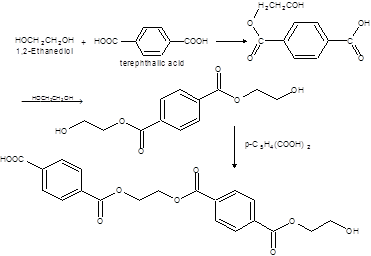
Terylene or Dacron
(c) Free-radical vinyl polymerization: In we discussed briefly the polymerization of ethylene and substituted ethylenes under conditions where free radicals are generated — typically in the presence of small amounts of an initiator, such as a peroxide.
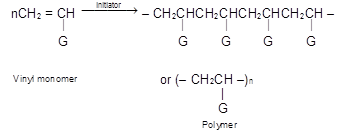
Reaction occurs at the doubly bonded carbons — the vinyl groups — and is called vinyl polymerization. A wide variety of unsaturated monomers may be used, to yield polymers with different pendant groups (G) attached to the polymer backbone. For example.
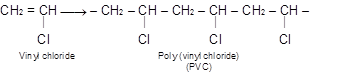
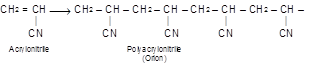
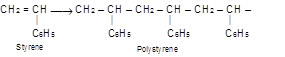
(d) Copolymerization:So far, we have discussed only polymerisation of a single monomeric compound to form a homopolymer, a polymer made up — except, of course, at the two ends of the long molecule — of identical units. Now, if a mixture of two (or more) monomers is allowed to undergo polymerization, there is obtained a copolymer a polymer that contains two (or more) kinds of monomeric units in the same molecule. For example:
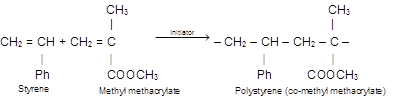
Illustration 14. An example of a condensation polymer is
(A) PVC (B) terylene
(C) polypropylene (D) polystyrene
Solution: (B)

Exercise 8.
What is the difference between addition and condensation polymersiation. Give an examples?
Some Important Polymers:
(a) Natural Rubber:Natural rubber is an addition polymer of isoprene (2-methyl-1,3-butadiene). Rubber has an average chain length of 5000 monomer units of isoprene.
The rubber in which the arrangement of carbon chain is trans with respect to the double bond is known as Gutta Percha and this is the natural rubber obtained from bark of various trees. Natural rubber is sticky material. This disadvantage is removed by 'VULCANISATION' which involves addition of sulphur to rubber and heating the mixture. sulphur forms short chains of sulphur atoms that link two hydrocarbon (isoprene) units together.
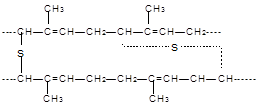
When tension is applied the chains can strengthen out but they cannot slip over each other because of sulphur bridges. Thus rubber can be stretched only to a certain extent and hydrocarbon chains have the tendency to regain their shape when tension is removed. Vulcanised rubber is thus stronger and less sticky than the natural rubber.
(b) Synthetic rubber: (Polychloroprene) or Neoprene) It is obtained by free radical polymerisation of chloroprene in

It is a thermoplastic and need not to be vulcanised. It is a good general purpose rubber and superior to natural rubber as it is resistant to the reaction of air, heat, light chemicals, alkalis and acids below 50% strength. It is used for making transmission belts, printing rolls and flexible tubing employed for conveyence of oil and petrol.
(c) Buna rubbers: Butadiene polymerises in the presence of sodium to give a rubber substitute viz. BuNa. It is of two types
(i) Buna - N or GRA: it is synthetic rubber obtained by copolymerisation of one part of acryl nitrile and two parts of butadiene.

It is more rigid responds less to heat and very resistant to swelling action of petorol, oils and other organic solvents.
(ii) Buna -S or GRS (General purpose Styrene rubber): It is a copolymer of three moles of butadiene and one mole of styrene and is an elastomer. It is obtained as a result of free radical copolymerisation of its monomers.

It is generally compounded with carbon black and vulcanised with sulphur. It is extremely resistant to wear and tear and finds use in manufacture of tyres and other mechanical rubber goods.
(d) Teflon: It is polymer of tetrafluorethylene (F2C=CF2) which on polymerization gives Telfon.
nCF2=CF2 (—CF2—CF2—)n
It is thermoplastic polymer with a high softening point (600K). It is very tough and difficult to work. It is inert to most chemicals except fluorine and molten alkali metals. It withstands high temperatures. Its electrical properties make it an ideal insulating material for high frequency installation.
(e) Nylon-66: It is a polymer resin. It is a condensation polymer formed by reaction between adipic acid and hexamethylene diamine. Both monomer units consist of 6 carbon atoms and therefore named nylon -66.


It is thermoplastic polymer when extruded above its melting point (536 K) through spinneret, it gives nylon fiber which is extremely tough and resistant to friction. It possess greater tensile strength, elasticity and lusture than any natural fiber. It is chemically inert and is fabricated into sheet, bristles and textile fibres.
(f) Nylon 6 or Perolon - L: A polyamide is prepared by prolonged heating of caprolactam at
530 - 540 K.

The fiber is practically identical to Nylon in properties
|
|
|
|
Complete the reactions
|
|
 Exercise 9.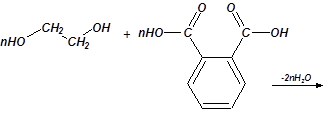

Exercise 10.
(a) What is the structure of nylon-6, made by alkaline polymerisation of caprolactom?
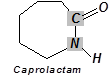
(b) Suggest a mechanism for the process. Is polymerisation of the chain reaction or step reaction type?

Exercise 11.
Arrange the following polymers in increasing order of their intermolecular forces. Also classify them as addition and condensation polymers:
Nylon-66, Buna-S, Polyethene
ANSWER TO EXERCISE
Exercise 1:
Disaccharide is sucrose.
Exercise 2:
Glucose reacts with NH2OH via open chain form which has free – CH = O group to form glucose oxime. Glucose penta acetate, cannot be converted into the open chain form because its anomeric hydroxyl group (C1– OH) is acetylated and hence does not form the oxime
Exercise 3:
(D)
Exercise 4:
(A) is a gem dichloride. (A) = CH3CH2CCl2CH3, (B) = CH3CH2COCH3
Exercise 5:
Epimers are those isomers which differ in configuration about a single chrial (asymmetric) centre in molecules containing more that one chiral centre. For example, glucose and mannose (both aldohexose) are emimers to each other as they differ in the configuration of only C2.
Anomers are epimers in which the chiral site was formely a carbonyl carbon. Thus a - and b - methyl glucoside are anomers to each other. Similarly a - and b- methyl fructosides are also anomers.
Exercise 6:
(D)
In aqueous solution the a - amino acid forms Zwitter ion.

In this case, H+ ion is furnished by NH3+, hence the acidic group is NH3+.
Exercise 7:
|
|
(A) |
|
(B) |
|
|
|
(C) |
|
(D) |
|

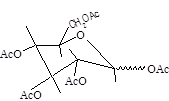
|
Exercise 8: |
|
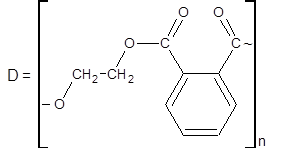
Exercise 10:
(a) 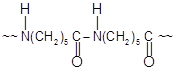
|
(b) |
|
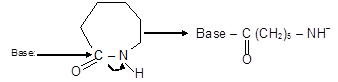

The reaction is anionic chain reaction polymerization, involving nucleophilic substitution at the acyl group of the cyclic amide. The base could be OH– itself or the anion formed by abstraction of the –NH proton from a molecule of lactam.
Exercise 11:
Polyethene < Buan – S < Nylon-66
Nylon-66 – Condensation polymer
Polyethene – Addition polymer
MISCELLANEOUS EXERCISES
Exercise 1: Explain the terms anomers and epimers taking example from carbohydrate chemistry.
Exercise 2: Calculate the percentage composition of a - and b - glucose present in the equilibrium mixture having rotation of +52.7°.
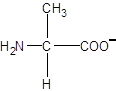
Exercise 3: Write the structure of alanine or CH3CH(NH2)COOH as it would exist in strongly basic solution.
Exercise 4: Write eqilibria showing the amphoteric behaviour of a water solution of glycine. All monoaminomonocarboxylic acids are slightly acidic.
Exercise 5: How can lysine and glycine be separated from each other? The isoelectric points are pH 9.6 for lysine and pH 5.97 for glycine?
Exercise 6: An electric current is passed through an aqueous solution of mixture of alanine (isoelectric point 6.0), glutamic acid (3.2) and arganine (10.7) buffered at pH= 6. What is the fate of the three acid?
Exercise 7: Differentiate between D – erythose and D – threose using mild oxidation and reduction separately.
Exercise 8: How the following conversions are made?
(i) Glucose into its osazone
(ii) Glucose into glucaric acid
(iii) Glucose into sorbitol
Exercise 9: How the following conversions are made?
(i) Glucose into n – hexane
(ii) Fructose into glucose
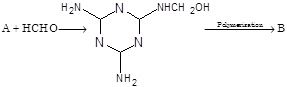
Exercise 10: Identify A, B, C………..
|
|
ANSWERS TO MISCELLANEOUS EXERCISES
Exercise 1: Epimers are those isomers which differ in configuration about a single chiral (asymmetric) centre in molecules containing more than one chiral centre. For example, glucose and mannose (both aldohexoses) are epimers to each other as they differ in the configuration of only C2.
Anomers are epimers in which the chiral site was formely a carbonyl carbon. Thus
a - and b - methyl glucosides are anomers to each other. Similarly, a - and b - methyl fructosides are also anomers.
Exercise 2: Let a and b the mole fraction of a - and b - glucose respectively at equilibrium. Then
a + b = 1 …(i)
However, we know that the specific rations of a - and b - glucose are +112° and +19° respectively. Thus if the specific rotation of the equilibrium mixture is
+52. 7°. Then at equilibrium
112°a + 19°b = 52.7° …(ii)
From equation (i), b = 1 – a
Putting the value of b in equation (ii)
112a + 19 (1 – a) = 52.7
On solving a = 0.362 or 36.2%
\ b = 0.638 or 63.8%
|
Exercise 3: |
|
Exercise 4: 
Since the solution is acidic the reaction to the right is favoured hence the anion predominates.
Exercise 5: An aqueous solution of the mixture is placed between two electrodes. The pH is adjusted to either 9.6 or 5.97, and an electric current is passed. At pH 9.6 lysine does not migrate, while anionic glycine migrates to the anode, where it is colloide. At pH=5.97, glycine does not migrate while cationic lysine migrates to the cathode.
Exercise 6: At pH 6 glutamic acid is present as an anion and migrates to the anode. Arganine is present as a cation and migrates to the cathode. Alanine is dipolar ion remains uniformlly distributed in solution.
|
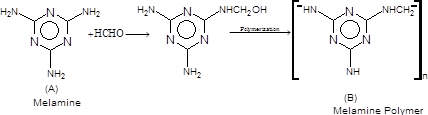
Exercise 10: |
|
SOLVED PROBLEMS
Subjective:
Board Types Questions
Prob 1. In E. coli DNA, the AT/GC ratio is 0.93. If the number of moles of adenine in the DNA sample is 558,000, calculate the number of moles of guanine present
Sol. Number of moles of adenine must be equal to that of thymine
(A + T) = 558,000 + 558,000 = 1116000
Since (A + T)/(C + G ) = 0.93
Therefore, no of moles of C + G
C + G = 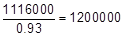
Since number of moles of C = number of moles of G
Number of moles of guanine = 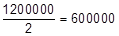
Prob 2. How will you synthesize alanine from acetylene?
|
Sol. |
|

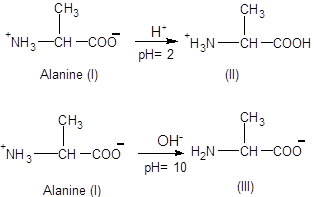
Prob 3. Write the structure of alanine at pH =2 and pH = 10.
Sol. Amino acids exist as zwitter ions (I) in aqueous solution. In presence of acids (pH=2) basic COO– accepts a proton to give cation (II) but in presence of base (pH = 10), the acidic  donates a proton to the base and thus exists as anion (III).
|
|
Prob 4. Glycine exists as (H3N+CH2COO–) while anthranilic acid (P–NH2C6H4– COOH) does not exist as dipolar ions.
Sol. – COOH is too weakly acidic to transfer H+ to the weakly basic – NH2 attached to the electron withdrawing benzene ring. When attached to an aliphatic carbon, the – NH2 is sufficiently basic to accept H+ from – COOH group
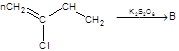
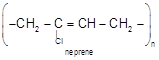
Prob 5. nCF2 = CF2  (–CF2 – CF2 –)n Teflon
Sol. A = (NH4)2S2O8
IIT Level Questions
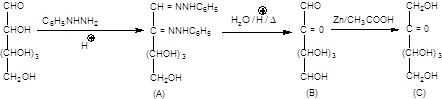
Prob 6. Complete the following reaction:
|
|

|
Sol. |
|
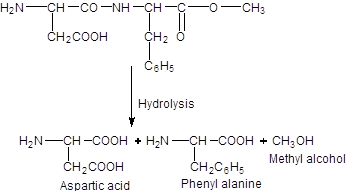
Prob 7. In the structure of aspartame (an artificial sweetner) which is a peptide
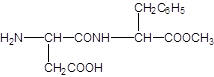
(i) Identify the four functional groups
(ii) Write the zwitterionic structure
(iii) Write the structure of amino acids obtained from the hydrolysis of aspartame
Sol. (i) Four functional groups in aspartame are
– NH2 (amino group)
– COOH (carboxyl group)
 (Amide group)
 (Ester group)
|
(ii) |
|
|
(iii) |
Hydrolysis of aspartame gives following two amino acids |
|
|

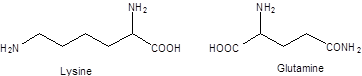
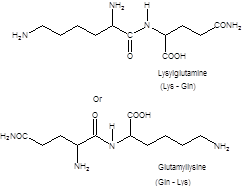
Prob 8. Following two amino acids lysine and glutamine form dipeptide linkage. What are two possible dipeptide?
|
Sol. |
|
|
|
|

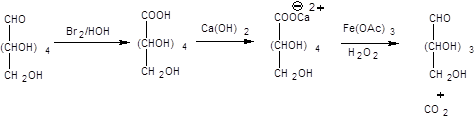
Prob 9. Complete the following reactions
|
|

|
Sol. |
|
|
Prob 10. |
|
|
Sol. |
B = |
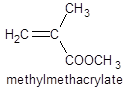
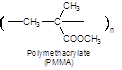
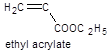
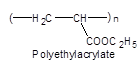
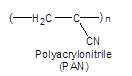
Prob 11. Give the classification of polymers obtained from esters of acrylic acid
(CH2 = CH.COOH)
|
Sol. |
Formula of monomer |
Polymer |
Characteristics |
Uses |
|
|
|
|
Hard transparent, high optical clarity. It is capable of acquiring different colours and tints |
Lenses, transparent object domes and skylights plastic jewellery |
|
|
|
|
Tough and rubbery polymer |
Similar to above |
|
|
|
|
Hard, horney and high melting material |
Used in preparing cloth, carpets and blankets |

Prob 12. When primary bromides are treated with a solution of NaI in pure acetone precipitate generates within 3 minutes at 25°C whereas primary chlorides when treated with same reagent precipitate generates within 6 minutes at 50°C. Explain.
Sol. The reaction is probably of the SN2 type involving a bimolecular attack of the iodide ion upon the carbon atom carrying the chloride or bromine. Now Br– is better leaving group when Cl– (as it is a weaker base). So the rate of the reaction for bromides is faster.
RBr + NaI ¾® RI + NaBr¯
RCl + NaI ¾® RI + NaCl¯
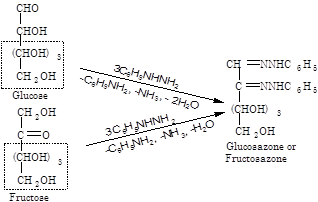
Prob 13. Glucose and fructose give the same osazone? Explain
Sol. During osazone formation reaction occurs only at C1and C2 while rest of the molecule remains same, and glucose & fructose differ from each other only in arrangement of atoms at C1 and C2, so they give same osazone
|
|
Prob 14. Specific rotations of  -anomer of given mono saccharide is + 112o and for
 -anomer is + 19o. Specific rotation of equilibrium mixture is 52.7o calculate % composition of and anomers in the equilibrium mixture.
Sol. Suppose fraction of andanomers is X and Y respectively
X + Y = 1 ……………………..(1)
112X + 19Y = 52.7……………(2)
By solving above two equations
X = 36.2%, Y = 63.8%
Prob 15. Predict the products of the treatment of glycine with
(a) Aqueous NaOH
(b) Aqueous HCl
(c) Acetic anhydride
(d) NaNO2 + HCl
Sol. (a) H2N.CH2COO–Na+
(b) Cl– + H3NÅCH2COOH
|
(c) |
|
|
(d) |
HOCH2COOH + N2 |
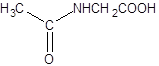
Objective:
Prob 1. Peptide linkage is
|
(A) |
|
(B) |
|
|
(C) |
|
(D) |
|
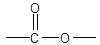

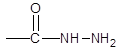
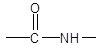
Sol. (D). Peptide linkage is formed when two amino acid combine with elimination of water.

Prob 2. If one strand of a DNA has the sequence -AATCGTAGGCAC-.What is the sequence of complementary strand.
(A) TTAGCATCCGTG (B) TTAGCATCCGTG
(C) UUTCGTAGGCAC (D) UUAGCAUCCGUG
Sol. DNA is AATCGTAGGCAC its complementary strand will be TTAGCATCCGTG. Hence (B) is correct answer.
Prob 3. Structure of DNA molecule is
(A) single stranded (B) linear
(C) branched (D) double strand
Sol. DNA always exists as double stranded, only at the time of replication or transcription it acts as template (single strand) for synthesis of new strand.
Prob 4. Which amino acid is achiral?
(A) Alanine (B) Valine
(C) Proline (D) Histidine
(E) None of these
Sol. All amino acid except glycine have asymmetric carbon atom so answer is (E).
Prob 5. Match items in list –I with those in the list – II form the combinations shown.
|
List – I |
List – II |
|
(i) Pepsin |
(A) Genetic material |
|
(ii) Nucleic acid |
(B) Digestive enzyme |
|
(iii) Ascorbic acid |
(C) Antibiotic |
|
(iv) Testosterone |
(D) Sex hormone |
|
|
(E) Vitamin |
(A) I – B; II – A ; III – C ; IV – E (B) I – A ; II – B ; III – E ; IV – C
(C) I – B ; II – A ; III – E ; IV – D (D) I – C ; II – A ; III – A ; IV – D
Sol. Answer is (B), pepsin is a diagestic enzyme, nucleic acid is genetic material, ascorbic acid is vitamin C and testosterone is sex hormone.
Prob 6. Which substance is not present in nucleic acids?
(A) cytosine (B) adenine
(C) thymine (D) guanidine
Sol. Nitrogenous base in nucleic acids are
Purine - Adenine and guanine
Pyrimidine – Cytosine and Thymine or uracil
So answer (D) is correct.
Prob 7. Nylon-66 is a polyamide of
(A) Vinylchloride and formaldehyde
(B) Adipic acid and methyl amine
(C) Adipic acid and hexamethylene diamine
(D) Formaldehyde and melamine
|
Sol. |
|
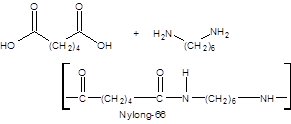
\ (C)
Prob 8. Which of the following is not a condensation polymer?
(A) Glyptal (B) Nylon-66
(C) Dacron (D) PTFE
Sol. Others are condensed polymer
\ (C)
Prob 9. Which of the following is an example of basic dye?
(A) Alizarine (B) Indigo
(C) Malachite (D) Orange – I
|
Sol. |
|
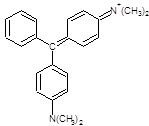
\ (C)
Prob 10. Which one of the following is a copolymer?
(A) Buna-S (B) Polyvinyl chloride
(C) Polypropylene (D) Poly-cis-isoprene
Sol. (A). Polymers whose repeating units are derived from two or more types of monomers units, are called copolymer. Only Buna-S is obtained by the copolymerization of butadiene and styrene monomers. Other polymers (B), (C) and (D) are homopolymers, because they consists of only one type of monomers.
True and False
Prob 11. Essential amino acids are synthesized inside the body.
Sol. False
Prob 12. Amino acids are linked together by glycoside bond.
Sol. False
Prob 13. Sequence one strand DNA has AATCGAGGAC and complementary sequence is TTAGCATCCGTG.
Sol. True
Prob 14. Glycogen is a storage food in animal.
Sol. True
Prob 15. At isoelectric point migration of amino acid is stopped.
Sol. True
Fill in the Blanks
Prob 16. Building block of proteins are…………………………..
Sol. Amino acids
Prob 17. Deficiency of vitamin……………….cause pain in joints.
Sol. B1
Prob 18. Equimolar mixture of glucose & fructose called as………………
Sol. Invert sugar
Prob 19. Bakelite is…………….polymer of……………..& formaldehyde.
Sol. Cross linked, Phenol
Prob 20. PAN is also called as…………………….
Sol. Orlon
ASSIGNMENT PROBLEMS
Subjective:
Level - O
1. How will you distinguish between glucose and fructose?
2. Fructose does not contain an aldehyde group but still reduces Tollen’s reagent
3. Explain why sucrose is not a reducing sugar?
4. What are anomers of glucose? How do they differ and what is chief consequence of the difference
5. Explain the following terms:
(i) Gene (ii) Codon (iii) Genetic code
6. List three functions of nucleotides in a cell.
7. Write the hydrolysis products of lactose and starch.
8. Write a short note on zwitter ion.
9. What is DNA? Discuss its component and structure.
10. What are the differences between vitamins and hormones?
11. “The two strands of DNA are not identical but complementary’’ Explain the statement
12. Explain how transcription and translation are interrelated?
13. Explain mutarotation. Give its mechanism in case of D – glucose.
14. What type of linkages are responsible for the formation of?
(i) primary structure of proteins.
(ii) cross linking of polypeptide chain.
(iii) a- helix formation.
(iv) b- sheet structure.
15. What is meant by denaturation of protein?
Level – I
1. What are complementary bases? Draw structure to show hydrogen bonding between adenine and thymine and between guanine and cytosine
2. What are amino acids? Describe their Zwitterion structure, what do you know about isoelectric point of amino acids?
3. Answer the following about protein synthesis
(i) Name the location where protein synthesis occurs.
(ii) How do 64 codons code for only 20 amino acids?
(iii) During translation which one of the two end functional groups of the polypeptide is formed first?
(iv) Which of the two bases of codon are most important for coding, the first two or last two?
4. If a fragment of DNA molecule has the base sequence
(A) AGATGCCGA (B) ATCTGCTAC
(C) TGATGCCGA (D) AAGCCGATG
What is the base sequence of the complementary strand?
|
5. |
A |
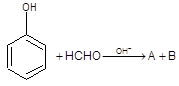
 C,
C,  D
D6. Two samples of DNA, A and B have melting temperatures 320 and 330 K respectively. can you draw any conclusion from these data regarding their base content
7. How will you distinguish between glucose and sucrose? (cane sugar)
8. Show the fundamental unit of structure common to all polypeptides and proteins and show how cross linking occurs between two chains by hydrogen – bonding.
9. Maltose and sucrose are both disaccharides having formula C12H22O11, maltose is reducing sugar but sucrose is not why?
|
10. |
|

Level – II
1. Can the acid chloride of an a - amino acid be made by treating it with SOCl2?
2. In E. coli DNA, AT / GC ratio is 0.93. If the number of moles of cytosine in the DNA sample is 465000. Calculate the number of moles of Thymine present
3. Treatment of glucose with HIO4 gives results that confirm its aldohexose structure. What product should be formed, and how much HIO4 should be consumed
4. In what respect does natural rubber differ from synthetic rubber? Give the synthesis of neoprene from acetylene.
5. Ribose is a constituent of RNA – Ribose and arabinose gives same osazone If the structure of arabinose is [A]. What will be structure of ribose?
|
(A) |
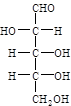
6. Why aldoses react with Fehling’s solution and ph NHNH2, but not with NaHSO3?
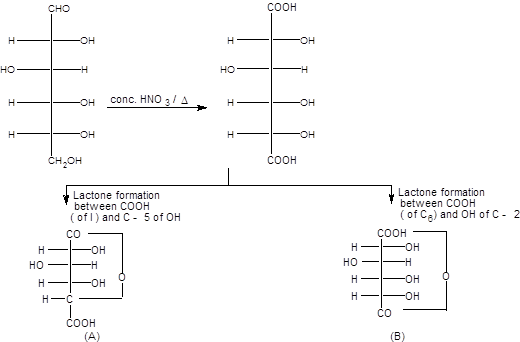
7. Glucose on oxidation with conc. HNO3 gives glucaric acid. Glucaric acid on dehydration gives two six membered lactones. What are that lactones
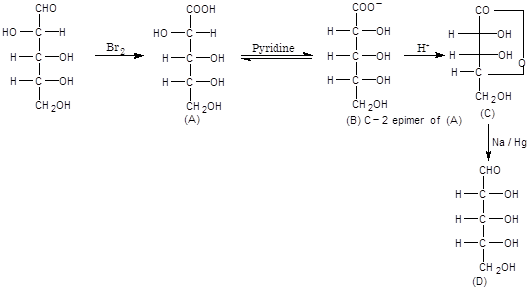
8. Identify (A) to (D) in given sequence of reactions
Aldose 
9. Predict the products of the treatment of glycine with
(A) Aqueous NaOH
(B) Aqueous HCl
(C) Benzoyl chloride + aqueous NaOH
10. In an electric field, the amino acid migrates towards cathode when pH is below the isoelectric point while it migrates towards anode when pH is higher than isoelectric point
Objective:
Level – I
1. Which of the following is not a monosaccharide?
(A) Fructose (B) Ribose
(C) Glucose (D) Pectins
2. Which of the following is vitamin – E?
(A) Retinol (B) Calciferol
(C) Tocopherol (D) Ascorbic acid
3. Most important energy carrier in all living cell is
(A) ADP (B) ATP
(C) AMP (D) UDP
4. Which of the following is sweetest?
(A) Sucrose (B) Glucose
(C) Fructose (D) Lactose
5. a- helix structure is
(A) Primary structure (B) Secondary structure
(C) Tertiary structure (D) Quaternary structure
6. Denaturation of protein takes place by
(A) Heating (B) Addition of acid or base
(C) Addition of urea (D) All of these
7. Maltose is made up of
(A) a- D – glucose
(B) D – fructose
(C) Glucose and fructose
(D) a- D – Glucose and b- D – glucose
8. Monomer units of starch are
(A) a- glucose (B) b- glucose
(C) Galactose (D) Pyranose
9. Which of the following is essential amino acid?
(A) Threonine (B) Valine
(C) Lysine (D) All of these
10. Which of the following is essential fatty acid?
(A) Oleic acid (B) Linoleic Acid
(C) Linolenic Acid (D) All of these
11. In a pentapeptide chain, how many peptide linkages are present?
(A) Five (B) Four
(C) Six (D) Three
12. Amino acids are derivatives of
(A) Tertiary amine (B) Hydroxy acid
(C) Carboxylic acid (D) Proteins
13. Lysine is which type of amino acid
(A) Basic (B) Acidic
(C) b- amino acid (D) Neutral
14. Which one of the following elements is not present in nucleic acid
(A) Carbon (B) Oxygen
(C) Phosphorus (D) Sulphur
15. Which is peptide hormone?
(A) Cytokinin (B) Insulin
(C) Glucagon (D) Progesterone
16. Which of the following is/are addition polymer/s?
(A) PVC (B) Nylon-6
(C) Teflon (D) Terylene
17. Nylon-6 6 is formed by heating
(A) Adipic acid and methane (B) Succinic acid and 1,3-butadiene
(C) Adipic acid and hexamethylene diamine (D) none
18. Terylene (Dacron) is a condensation polymer of
(A) Formaldehyde and urea
(B) Ethylene glycol and ethylene diisocyanate
(C) Ethylene glycol and terephthalic acid
(D) Maleic anhydride and methyelene glycol
19. Polystyrene is a
(A) Copolymer (B) Addition polymer
(C) Condensation polymer (D) None
20. The polymer having strongest intermolecular forces is
(A) Fibres (B) Elastomer
(C) Thermoplastic (D) Thermosetting polymer
21. Polymer obtained by condensation polymerization is
(A) Polythene (B) Teflon
(C) Phenol - formaldehyde (D) Nitrile rubber
22. Which is an example of thermosetting polymer?
(A) Polythene (B) PVC
(C) Neoprene (D) Bakelite
23. The catalyst used in the manufacture of polyethylene by Ziegler method is
(A) Titanium tetrachloride and triphenyl aluminium
(B) Titanium tetrachloride and triethylaluminium
(C) Titanium dioxide
(D) Titanium isopropoxide
24. 
The value of ‘n’ in the above reaction is
(A) 2 (B) 4
(C) 5 (D) 6
25. Ebonite is
(A) natural rubber (B) Synthetic rubber
(C) Highly vulcanized rubber (D) Polypropene
Level – II
1. A pair of diastereomers that differ only in the configuration about a single carbon atom (which is not a carbonyl group) are called
(A) Epimers (B) Anomers
(C) Conformers (D) Enantiomers
2. Carbohydrates which differ in configuration at the glycosidic carbon (i.e. C1 in Aldose and C2 in ketoses) are called
(A) Anomers (B) Diastereomers
(C) Epimers (D) Enantiomers
3. Glucose  [A], [A] is
(A) Glucaric acid (B) Gluconic acid
(C) Bromo hexane (D) Hexanoic acid
4. Which of the following is a basic amino acid?
|
(A) |
|
(B) |
|
|
(C) |
|
(D) |
|
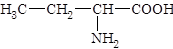
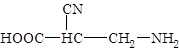
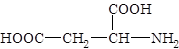
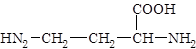
|
5. |
|
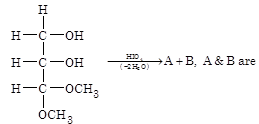
(A) HCHO & OHC.CH (OCH3)2
(B) HCHO & (CH3O)2 CH – COOH
(C) (CH3O)2 CHOCH & HCOOH
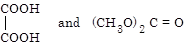
|
(D) |
|
6. Tertiary structure of protein contains which type of forces
(A) Electrostatic forces only
(B) Electrostatic as well as hydrogen bonds
(C) Electrostatic, hydrogen bonds and vander wall forces
(D) Electrostatic hydrogen bond, Vander wall forces, dipole-dipole attractions and disulphide cross-linkage
7. Primary structure of protein contains which type of bonds
(A) Only hydrogen (B) Only covalent
(C) Only vander wall (D) All of these
8. Which of the following is optically inactive amino acid?
(A) Alanine (B) Lysine
(C) Glycine (D) Arginine
9. Deficiency of vitamin E causes
(A) Beri-beri (B) Scurvy
(C) Antifertility (D) All of these
10. In the given reaction
Glucose +n phenyl hydrazine ® osazone. Value of n
(A) Three (B) Two
(C) One (D) Four
11. Which of the following compounds will not show mutarotation?
(A) Methyl -a- D – glucopyranoside (B) b- D (+) galactopyranose
(C) b- D (+) glucopyranose (D) a- D (+) glucopyranose
12. The monomer of neoprene is
(A) chloroprene (B) isoprene
(C) cebacic acid (D) none of these
13. Which biomolecule act as catalyst?
(A) Carbohydrate (B) Nucleic acid
(C) Protein (D) Hormones
14. P – Cl – C6H4NH2 and ph NH3+Cl- can be distinguished by
(A) NaOH (B) AgNo3
(C) Zn (D) LiAlH4
15. Write the sequence of bases on mRNA molecule synthesized on the following strand of DNA, TACAGTAAC
(A) ATGTCATTG (B) UTGTCUTTG
(C) AUCACATTG (D) AUGUCAUUG
16. Which of the following polymers do not involve cross linkages?
(A) Meimac (B) Bakelite
(C) Polyethene (D) Vulcanized rubber
17. Polymer which has amide linkage is
(A) Nylon - 66 (B) Terylene
(C) Teflon (D) Bakelite
18. Glyptal polymer is obtained form glycerol by reacting with
(A) Malonic acid (B) Phthalic acid
(C) Maleic acid (D) Acetic acid
19. Caprolactic acid is a monomer of
(A) Nylon - 6 (B) Nylon - 66
(C) Dacron (D) Neoprene
20. Terylene is condensation polymer of ethylene glycol and
(A) Benzoic acid (B) Phthalic acid
(C) Salicyclic acid (D) Terephthalic acid
21. Teflon, polystyrene and neoprene are all
(A) Copolymers (B) Condensation polymers
(C) Homopolymers (D) Monomers
22. The catalyst used for the polymerization of olefins is
(A) Zieglar- Natta catalyst (B) Wilkinson's catalyst
(C) Pd- catalyst (D) Zeise's salt complex
(E) Zeolite
23. The monomer of Teflon is
(A) ethane (B) difluoro, dichloroethene
(C) tetrachloroethene (D) tetrafluroethene
24. Which of the following is a polyamide molecule?
(A) Terylene (B) Rayon
(C) Nylon -6 (D) Polystyrene
25. Which of the following is/are acrylic acid polymers?
(B) PMMA (B) PMAA
(C) PEAA (D) all
ANSWERS TO ASSIGNMENT PROBLEMS
Subjective:
Level - O
3. Sucorse is not a reducing sugar because its two monosacchride units (glucose and fructose) are linked through the carblonyl groups (reducing centres).
5. (i) Gene is segment of a DNA molecule which codes for a specific protein or polypeptide.
(ii) Codon is a triplet of four bases i.e. A, C, G and U.
(iii) Genetic code: The relation between the nucleotide triplets and amino acids is called the genetic code.
7. Hydrolysis products of lactose are glucose and galactose and of starch are D-glucose units.
8. Amino acids contain both a basic group (¾NH2) and an acidic group (¾COOH). In the dry solid state, amino acids exist as dipolar ions, a form in which the carboxylic group is present as a carboxylate ion  and the amino group is present as an aminium ion, (NH3+). Dipolar ions are also called Zwitter ions.
10. Vitamins: These are a group of biomolecules which are required in small amounts for normal metabolic processes and for the life, growth health of human beings and animal organisms.
Hormones: Hormones are biomolecules which produce their physiological action at a site other than that of their origin. They are required only in very small amounts. Like fats and carbohydrates, they are not stored in the body but are continuously being produced.
Level - I
4. (A) TCTACGGCT (B) TAGACGATG
(C) ACTACGGCT (D) TTCGGCTAC
|
5. |
|
|
|
|
|
|
||
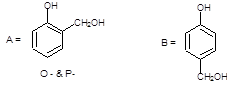
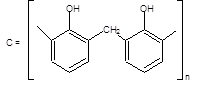
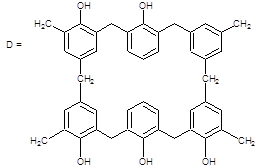
6. C.G base pair has 3 hydrogen bonds and AT base pair has two H – bonds, therefore, CG base pair is more stable than AT base pair. Since sample B has higher melting point than sample A, therefore sample B has higher CG content as compared to sample A
7. Glucose is reducing sugar, it reacts with tollens reagent to form silver mirror. While sucrose is a non-reducing sugar. It does not react

|
8. |
|
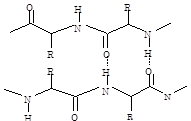
10. A = 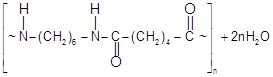
Level – II
1. No, two molecules of the initially formed a - amino acid chloride react with each other to form a dipeptide acid chloride which, in turn reacts further to form tetrapeptide acid chloride etc


2. No. of moles of cytosine must be equal to
Guanine C + G = 465, 000 + 465, 000 = 930, 000
Since (A + T)/C + G = 0.93
A + T = 930000 × 0.93
A + T = 864900 (since no of molecule of A = No of T)
T = 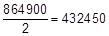
3. In glucose there are five – OH groups so five moles of HIO4 are consumed giving main product formic acid and formaldehyde
Glucose 
5. Arabinose and ribose gives same osazone hence both are C – 2 epimers. Thus structure of ribose is
|
|
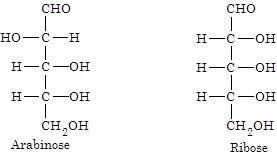
6. Reaction with ph NHNH2 and Fehling’s solution is irreversible but with bisulphite ions is reversible
|
7. |
|
|
8. |
|
9. (A) 
(B) 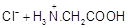
(C) 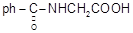
Objective:
Level – I
1. D 2. C 3. B
4. C 5. B 6. D
7. A 8. A 9. D
10. D 11. B 12. C
13. A 14. D 15. B, C
16. A, C 17. C 18. C
19. B 20. A 21. C
22. D 23. B 24. C
25. C
Level – II
1. A 2. A 3. B
4. D 5. A 6. D
7. B 8. C 9. C
10. A 11. A 12. A
13. C 14. B 15. D
16. C 17. A 18. B
19. A 20. D 21. C
22. A 23. D 24. C
25. D