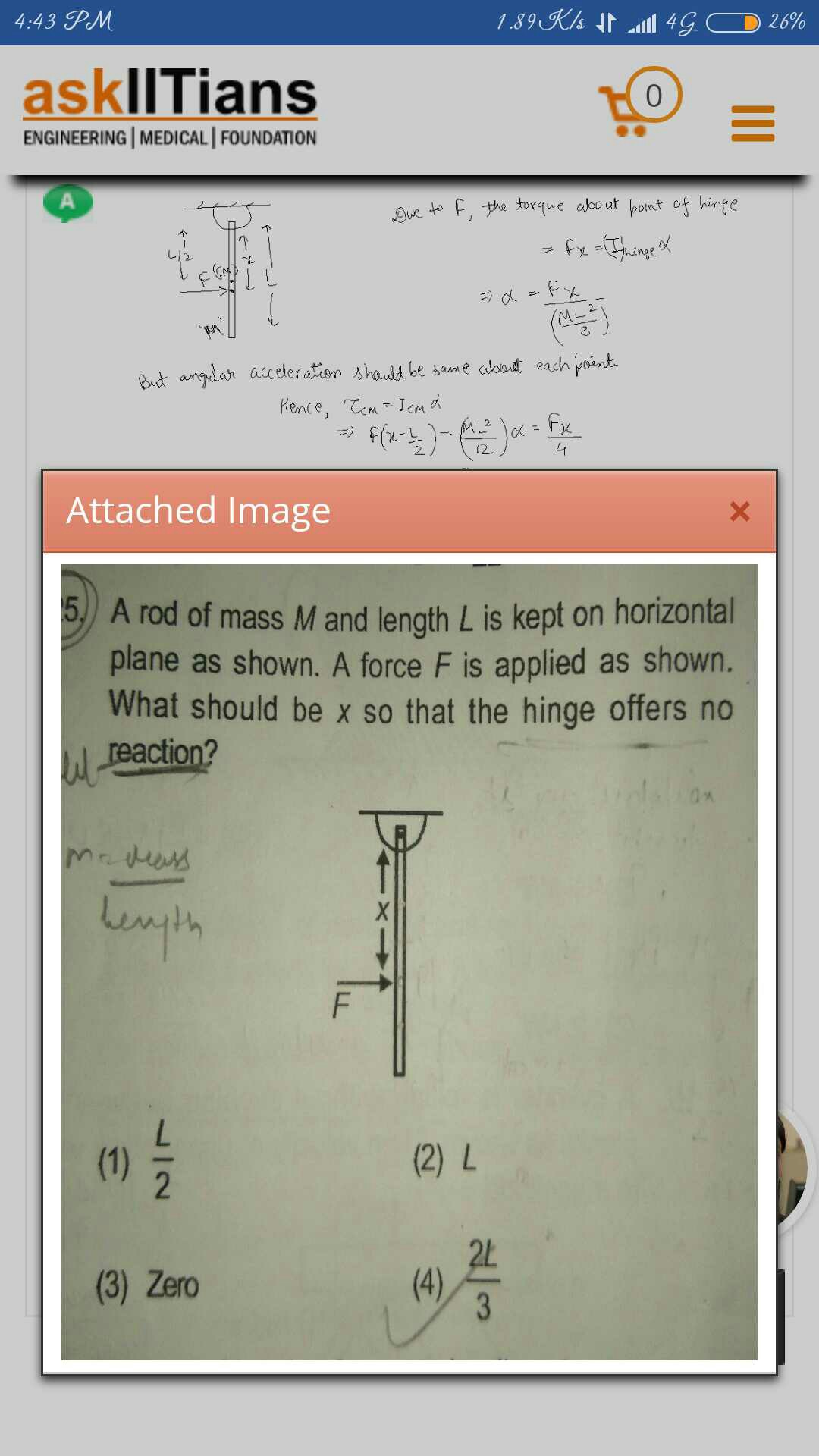
It's great that you're diving deeper into the concept of hinges and their reactions. When we say that a hinge offers "no reaction," we are typically referring to a specific type of hinge known as a "pinned hinge" or "revolute joint." This means that the hinge allows rotation but does not resist any forces acting perpendicular to its axis. Let's break this down further to clarify what this means and what you should consider.
Understanding Hinge Reactions
In mechanics, a hinge is a type of joint that allows two parts to rotate relative to each other. The key characteristic of a hinge is its ability to permit angular movement while restricting translational movement. When we say a hinge offers no reaction, we are focusing on the fact that it does not exert any force to counteract certain loads.
What Does "No Reaction" Mean?
When a hinge is described as having "no reaction," it implies that it does not provide a resisting force against certain types of loads. This can be understood in the context of static equilibrium. In a static system, all forces and moments must balance out. A hinge that offers no reaction means:
- The hinge allows free rotation around its axis.
- It does not provide any vertical or horizontal support against loads acting on the connected members.
- It can be modeled as a simple support in calculations, where it only transmits moments and allows rotation.
Basic Requirements to Consider
When analyzing a system with hinges that offer no reaction, there are several important factors to keep in mind:
- Load Types: Understand the types of loads acting on the structure. If the loads are purely vertical or horizontal, the hinge will not resist these forces.
- Support Conditions: Identify how the rest of the structure is supported. If other supports are present, they may take on the loads that the hinge does not resist.
- Moment Distribution: Analyze how moments are distributed in the system. Since the hinge allows rotation, moments will be transferred through the hinge but not resisted.
- Material Properties: Consider the materials involved. The strength and flexibility of the materials can affect how the hinge behaves under load.
Example for Clarity
Imagine a door attached to a wall with a hinge. When you push the door to open it, the hinge allows the door to rotate around its axis. If you were to push down on the door, the hinge does not push back up; it simply allows the door to pivot. In this case, the hinge is not providing any vertical support against the weight of the door—it’s just facilitating the rotation.
Practical Applications
Understanding hinges that offer no reaction is crucial in various engineering applications, such as:
- Designing mechanical linkages in machinery.
- Creating frameworks in civil engineering where certain joints are meant to allow movement.
- Analyzing dynamic systems where rotational motion is involved.
In summary, when dealing with hinges that offer no reaction, focus on the nature of the loads, the support conditions, and how moments are transferred through the system. This understanding will help you effectively analyze and design systems that incorporate such hinges. If you have any more questions or need further clarification, feel free to ask!