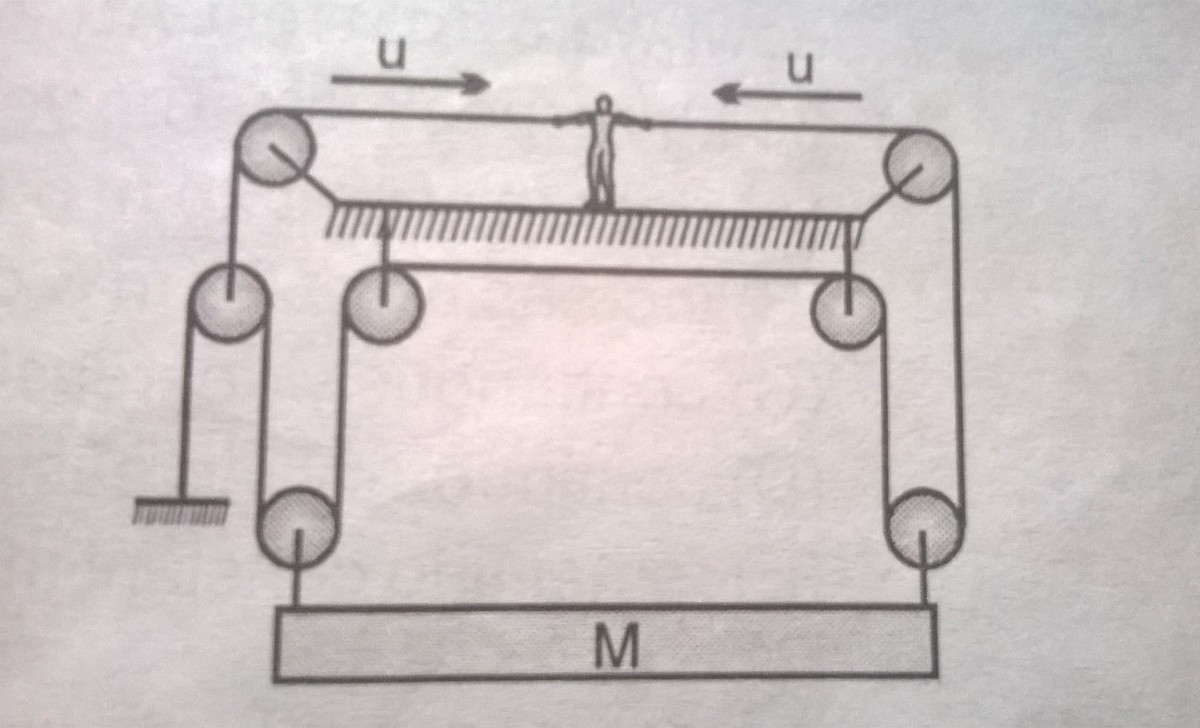
To determine the speed of the block in the system you described, we need to analyze the mechanics of the situation. When a man pulls on the rope from both sides with a constant speed, the movement of the block is directly influenced by how the rope is being manipulated. Let's break this down step by step.
Understanding the System
Imagine a block suspended by a rope that runs over a pulley. When the man pulls the rope from both sides, he is effectively shortening the length of the rope on either side of the block. Since the block can only move vertically, the speed at which the block moves will depend on how quickly the rope is being pulled.
Analyzing Rope Movement
When the man pulls the rope, he creates tension that causes the block to rise or fall. If he pulls the rope with a constant speed, let's denote that speed as v. Since the rope is continuous and the block is in the middle, the movement of the block will be influenced by the total length of rope being pulled.
- If the man pulls one side of the rope with speed v, the other side of the rope also moves with speed v.
- This means that the total length of rope being pulled on both sides is effectively 2v.
Calculating the Block's Speed
Since the block can only move vertically, the speed of the block, denoted as V_block, will be half the speed at which the rope is being pulled from both sides. This is because for every unit of rope pulled on each side, the block moves up by half that distance. Therefore, we can express this relationship mathematically:
V_block = v
In this case, if the man pulls the rope at a constant speed of v, the speed of the block will also be v. This means that the block moves vertically at the same speed as the rope is being pulled from either side.
Example for Clarity
Let’s say the man pulls the rope at a speed of 2 meters per second. According to our analysis, the block will also rise vertically at a speed of 2 meters per second. This is because the block is directly connected to the rope, and the movement of the rope translates directly to the movement of the block.
Final Thoughts
In summary, when the rope is pulled from both sides at a constant speed, the block will move vertically at the same speed as the rope is being pulled. This relationship is crucial in understanding systems involving pulleys and ropes, and it highlights the direct connection between the motion of the rope and the block.