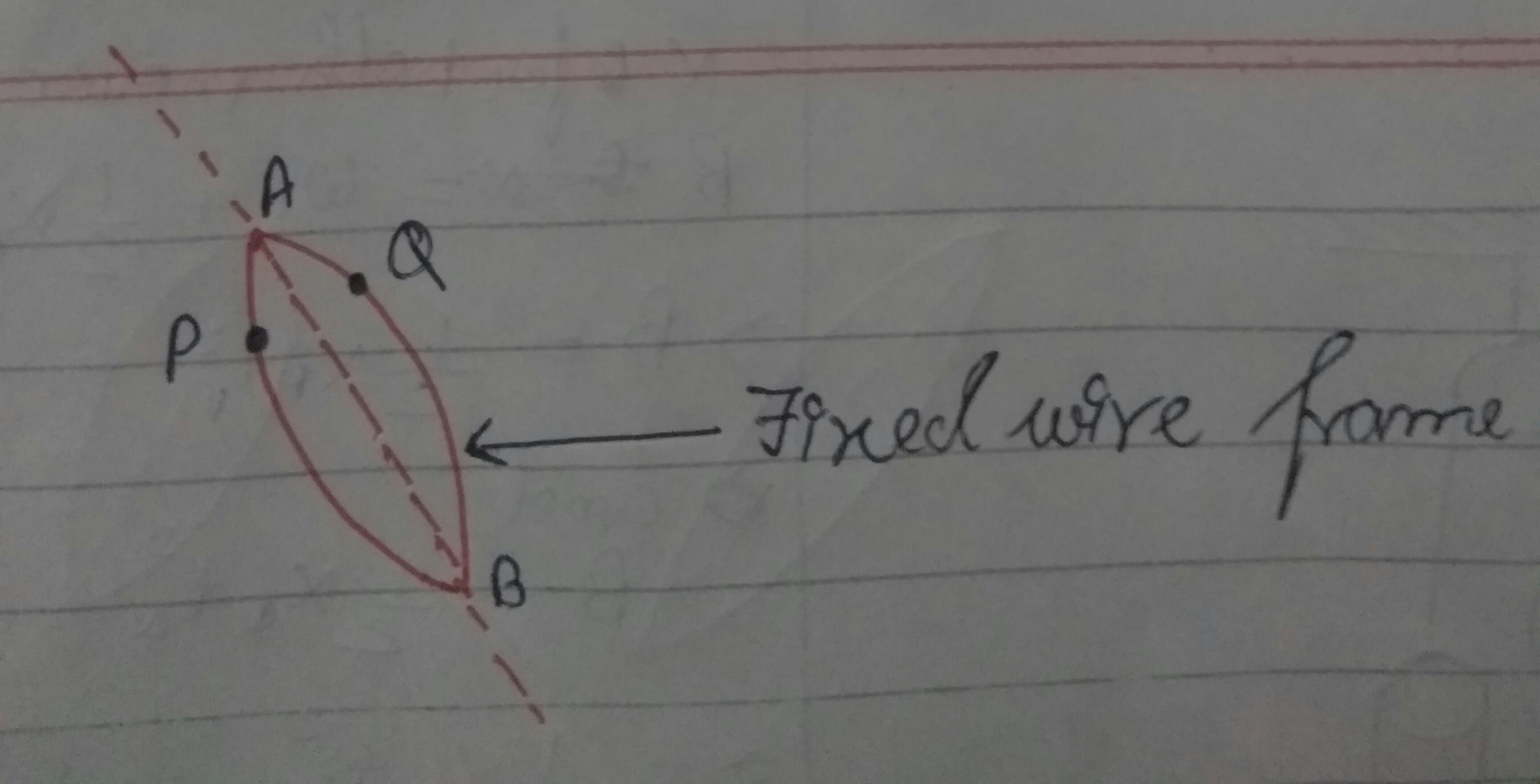
To determine which bead reaches point B first, we need to analyze the motion of the beads on the two circular tracks. Since both tracks have the same radius and length, we can focus on the geometry of the tracks and the forces acting on the beads as they slide down. Let's break this down step by step.
Understanding the Tracks
We have two circular tracks, both with the same radius, but they are oriented differently in a vertical plane. One track is likely a simple circular arc, while the other might be a more complex shape, such as a cycloid. The key here is to recognize how the shape of the track affects the motion of the beads.
Analyzing the Motion
When the beads are released from point A, they begin to slide down the tracks under the influence of gravity. The gravitational force acting on each bead is constant, but the path they take can significantly affect their acceleration and speed.
- Track Shape: If one track is a straight circular arc and the other is a cycloidal path, the cycloidal path will allow the bead to accelerate more efficiently due to its geometry.
- Acceleration: The bead on the cycloidal path experiences a greater component of gravitational force acting along the path, leading to a higher acceleration compared to the bead on the circular arc.
Comparing the Two Paths
To illustrate this, consider the following:
- The circular track has a constant radius, which means the gravitational force component acting along the track does not change as the bead moves.
- The cycloidal track, however, has a varying radius of curvature, allowing the bead to gain speed more rapidly as it descends.
Mathematical Perspective
From a physics standpoint, we can apply the principles of energy conservation. The potential energy at point A is converted into kinetic energy as the beads slide down. The bead on the cycloidal track will convert its potential energy into kinetic energy more efficiently due to the shape of the path.
Conclusion on Which Bead Reaches First
Given the above analysis, the bead on the cycloidal track will reach point B before the bead on the circular track. This is because the cycloidal path allows for a greater acceleration and a more efficient conversion of potential energy into kinetic energy. Therefore, even though both beads are released simultaneously from the same height, the geometry of their respective tracks plays a crucial role in determining which one arrives first.