

Grade 11Mechanics
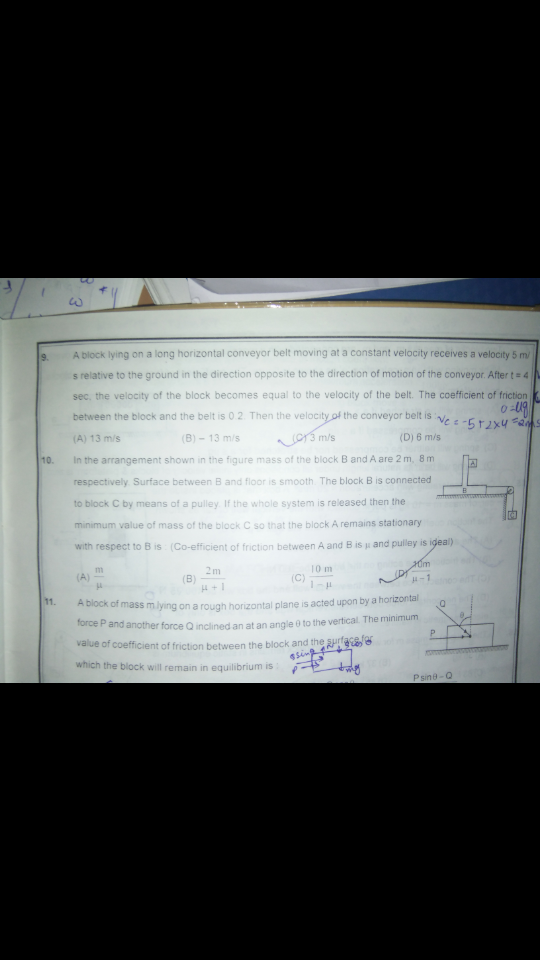
Q 10. Solution. Urgently. Required. Plz. Answer. Fast. .........


 Approved Tutor Answer1 Year ago
It seems like you're looking for a quick and effective solution to a problem, but I need a bit more context to provide the best answer. Whether it's a math question, a science concept, or something else entirely, having specific details will help me assist you more effectively. Let’s break down how to approach finding a solution to a problem step by step.
The first step in solving any issue is to clearly identify what the problem is. Ask yourself:
Once you have a clear understanding of the problem, the next step is to gather relevant information. This might involve:
With the information in hand, you can start to formulate a strategy for solving the problem. This could involve:
Now it’s time to put your plan into action. Carefully work through the steps you’ve outlined, ensuring that you:
After reaching a solution, take a moment to review your work. Ask yourself:
By following these steps, you can tackle a wide range of problems more effectively. If you can provide more specific details about your question, I would be happy to help you find a tailored solution!

Three identical balls are placed on a frictionless
horizontal surface touching each other. They stick to
each other because of adhesive. Another ball of same
radius and mass m is placed over the void created by
the three balls. Find the forces applied by the balls
kept on the floor to each other if the system remains
in equilibrium.
Last Activity: 10 Months ago
A car loaded with water having total mass 1000 kg moves on a straight horizontal Road starting from rest under the action of a force of 100 Newton. The water spills throw a small hole in the bottom at a rate of 0.1 KG per second the velocity of cart after 300 seconds is nearly.
11
21
31
41
Last Activity: 10 Months ago
Last Activity: 3 Years ago
Last Activity: 3 Years ago