

Grade 12th passMechanics
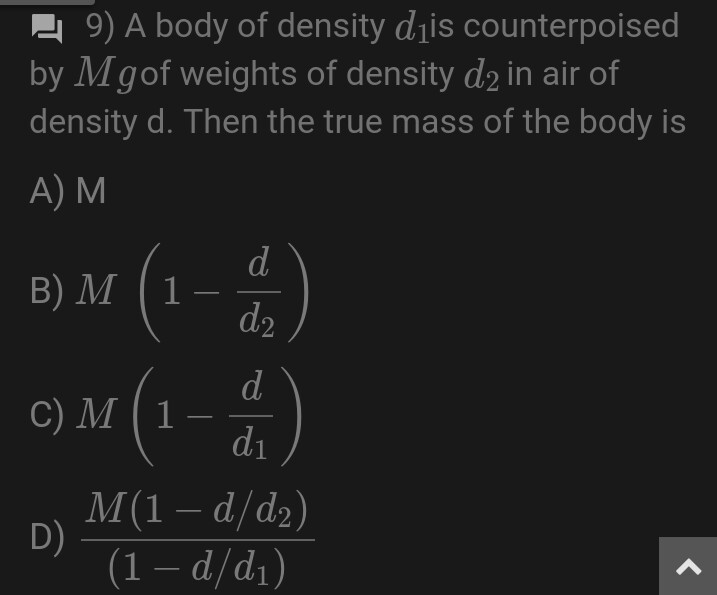
Please explain me the concept of this question. Please plz plz help me.
Please explain me the concept of this question. Please plz plz help me.


 Approved Tutor Answer0 Years ago
Absolutely, I’d be happy to help you understand the concept behind your question. To provide a thorough explanation, I’ll break it down into manageable parts, ensuring clarity and depth. Let’s dive into the topic together.
At the heart of many questions lies a fundamental idea or principle. It’s essential to identify what that is. For instance, if your question pertains to a scientific principle, we might be looking at laws of motion, energy conservation, or chemical reactions. If it’s related to mathematics, we could be discussing equations, functions, or geometric properties.
Let’s take a closer look at how to dissect a complex question:
Once you have a solid understanding of the key elements, it’s time to apply them. This could involve solving a problem, conducting an experiment, or analyzing data. Let’s say your question is about the laws of motion:
After working through the question, take a moment to reflect on what you’ve learned. Ask yourself:
By following these steps, you’ll not only answer your question but also deepen your understanding of the subject matter. Remember, learning is a journey, and each question is an opportunity to expand your knowledge. If you have more specific details about your question, feel free to share, and we can explore it even further!

Three identical balls are placed on a frictionless
horizontal surface touching each other. They stick to
each other because of adhesive. Another ball of same
radius and mass m is placed over the void created by
the three balls. Find the forces applied by the balls
kept on the floor to each other if the system remains
in equilibrium.
Last Activity: 9 Months ago
A car loaded with water having total mass 1000 kg moves on a straight horizontal Road starting from rest under the action of a force of 100 Newton. The water spills throw a small hole in the bottom at a rate of 0.1 KG per second the velocity of cart after 300 seconds is nearly.
11
21
31
41
Last Activity: 9 Months ago
Last Activity: 3 Years ago
Last Activity: 3 Years ago