

Grade 12th passMechanics
Please answer thus question with complete explanation and using concept. Please expert help me.
Please answer thus question with complete explanation and using concept. Please expert help me.
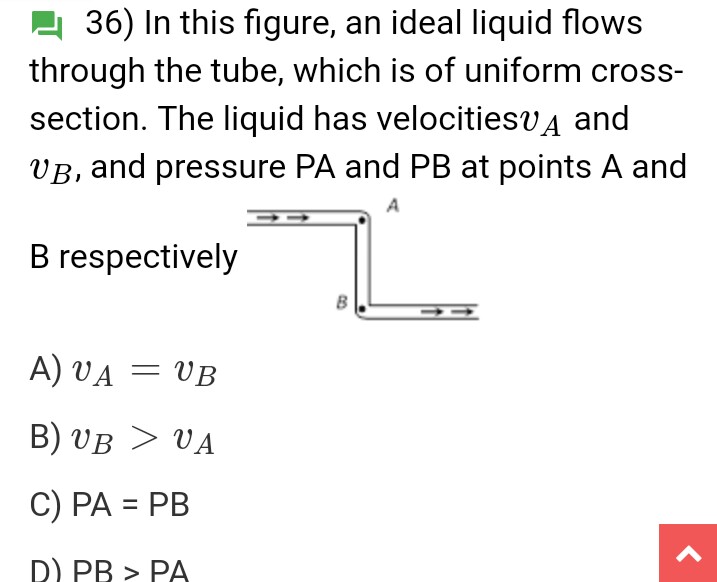


 Approved Tutor Answer1 Year ago
Absolutely, I'm here to help you understand the concept you're curious about. Let's dive into the topic step by step, breaking it down to ensure clarity and comprehension.
To begin, let’s identify the main idea behind your question. It’s essential to grasp the foundational elements before we can explore the more complex aspects. For instance, if we are discussing a scientific principle, we should first define the key terms and their relevance in the broader context.
Every concept can be dissected into smaller parts. Here’s how we can approach this:
Let’s say we’re discussing the concept of photosynthesis in biology. Here’s how we can apply the structure we just outlined:
Photosynthesis is the process by which green plants, algae, and some bacteria convert light energy into chemical energy, specifically glucose, using carbon dioxide and water.
This process is fundamental to life on Earth as it forms the base of the food chain. Plants are known as producers because they create their own food, which in turn supports herbivores and, subsequently, carnivores.
Consider a simple analogy: think of a plant as a solar panel. Just as a solar panel captures sunlight and converts it into electricity, a plant captures sunlight and converts it into energy stored in glucose. This energy is then used for growth and development.
Photosynthesis is not just a biological process; it has significant implications for agriculture, ecology, and even climate science. Understanding how plants convert sunlight can help us improve crop yields and develop sustainable farming practices.
By breaking down the concept into these components, you can see how each part contributes to a holistic understanding. This method can be applied to virtually any topic, allowing you to build a comprehensive knowledge base.
In summary, grasping complex concepts involves defining them, placing them in context, providing relatable examples, and discussing their applications. This structured approach not only aids in retention but also enhances your ability to think critically about the subject matter.

Three identical balls are placed on a frictionless
horizontal surface touching each other. They stick to
each other because of adhesive. Another ball of same
radius and mass m is placed over the void created by
the three balls. Find the forces applied by the balls
kept on the floor to each other if the system remains
in equilibrium.
Last Activity: 10 Months ago
A car loaded with water having total mass 1000 kg moves on a straight horizontal Road starting from rest under the action of a force of 100 Newton. The water spills throw a small hole in the bottom at a rate of 0.1 KG per second the velocity of cart after 300 seconds is nearly.
11
21
31
41
Last Activity: 10 Months ago
Last Activity: 3 Years ago
Last Activity: 3 Years ago