

Grade 12th passMechanics
My project name is fullness centrifugal pump Que: dising of pulleyon dynamo
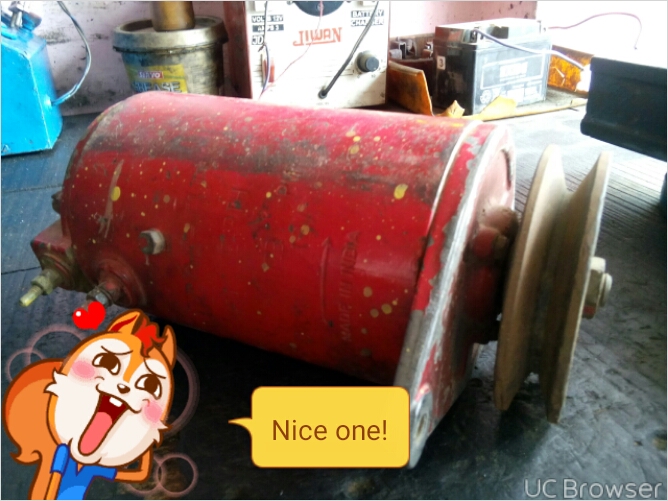


 Approved Tutor Answer1 Year ago
Designing a pulley system for a dynamo in a fullness centrifugal pump project involves several key considerations to ensure efficiency and functionality. Let’s break down the process step by step, focusing on the essential aspects of pulley design and its integration with the dynamo.
A pulley system is a simple machine that can change the direction of force and can also provide a mechanical advantage. In the context of a dynamo, which converts mechanical energy into electrical energy, the pulley system plays a crucial role in transferring power from the pump's motor to the dynamo.
To design an effective pulley system, you need to calculate the pulley ratio, which is the ratio of the diameters of the driving pulley (attached to the motor) to the driven pulley (attached to the dynamo). This ratio determines the speed at which the dynamo will operate.
Suppose your driving pulley has a diameter of 10 cm and the driven pulley has a diameter of 5 cm. The pulley ratio can be calculated as follows:
Pulley Ratio = Diameter of Driving Pulley / Diameter of Driven Pulley
In this case:
Pulley Ratio = 10 cm / 5 cm = 2
This means that for every rotation of the driving pulley, the driven pulley will rotate twice. This ratio is essential for determining the operational speed of the dynamo.
When designing your pulley system, consider the following factors to enhance efficiency:
Once you have designed your pulley system, it’s important to prototype and test it under real-world conditions. Monitor the performance of the dynamo and make adjustments as necessary to optimize efficiency. By carefully considering the design elements outlined above, you can create a reliable and effective pulley system for your fullness centrifugal pump project.

Three identical balls are placed on a frictionless
horizontal surface touching each other. They stick to
each other because of adhesive. Another ball of same
radius and mass m is placed over the void created by
the three balls. Find the forces applied by the balls
kept on the floor to each other if the system remains
in equilibrium.
Last Activity: 10 Months ago
A car loaded with water having total mass 1000 kg moves on a straight horizontal Road starting from rest under the action of a force of 100 Newton. The water spills throw a small hole in the bottom at a rate of 0.1 KG per second the velocity of cart after 300 seconds is nearly.
11
21
31
41
Last Activity: 10 Months ago
Last Activity: 3 Years ago
Last Activity: 3 Years ago