

Grade 11Mechanics
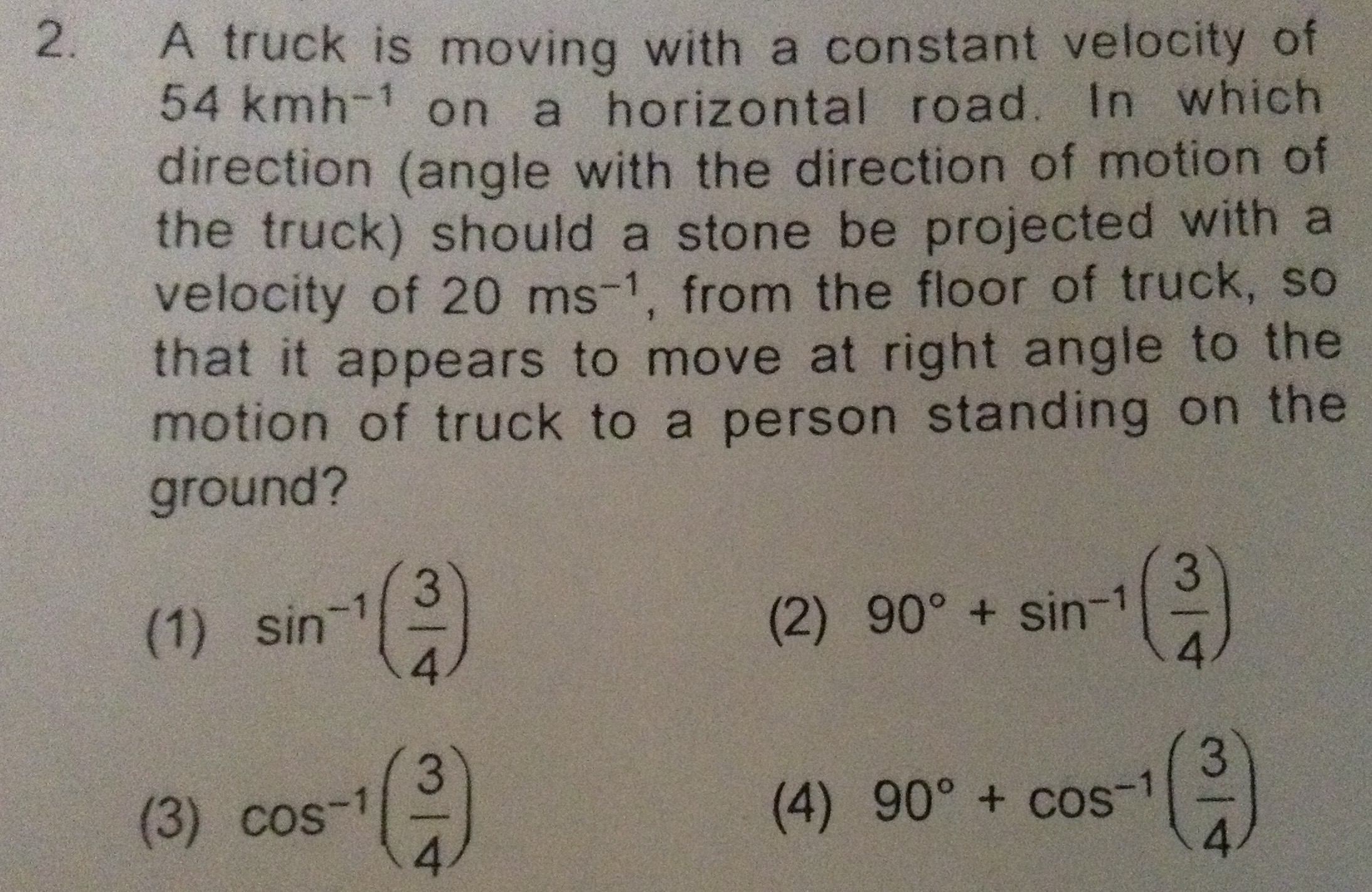
In which direction should a stone be projected with velocity 20m/s
In which direction should a stone be projected with velocity 20m/s


 Approved Tutor Answer1 Year ago
To determine the direction in which a stone should be projected with a velocity of 20 m/s, we need to consider the context of the problem. Are we aiming for maximum distance, maximum height, or a specific target? Each scenario will require a different angle of projection.
Projectile motion is the motion of an object that is thrown into the air and is subject to the force of gravity. The path that the object follows is called a trajectory, which is typically a parabola. The two main components of projectile motion are horizontal and vertical motion, which can be analyzed separately.
If the goal is to achieve the maximum horizontal distance (range), the stone should be projected at an angle of 45 degrees to the horizontal. This angle allows for an optimal balance between the vertical and horizontal components of the initial velocity.
On the other hand, if the objective is to reach the highest point possible, the stone should be projected vertically upwards, at an angle of 90 degrees. In this case, all of the initial velocity contributes to overcoming gravitational pull.
For hitting a specific target, the angle of projection will depend on the distance to the target and the height difference between the launch point and the target. In such cases, you can use the following formula to find the angle:
Range Formula: R = (v^2 * sin(2θ)) / g
Where:
By rearranging this formula, you can solve for θ if you know the desired range.
Let’s say you want to find the angle for a specific range of 40 meters. Plugging the values into the range formula:
40 = (20^2 * sin(2θ)) / 9.81
Solving for sin(2θ) gives:
sin(2θ) = (40 * 9.81) / 400 = 0.981
Now, you can find 2θ using the inverse sine function:
2θ = sin⁻¹(0.981)
Then, divide by 2 to find θ.
In summary, the direction in which you should project the stone with a velocity of 20 m/s depends on your goal. For maximum range, aim for 45 degrees; for maximum height, go straight up at 90 degrees; and for hitting a target, calculate the appropriate angle based on the distance and height. Understanding these principles will help you make informed decisions in projectile motion scenarios.

Three identical balls are placed on a frictionless
horizontal surface touching each other. They stick to
each other because of adhesive. Another ball of same
radius and mass m is placed over the void created by
the three balls. Find the forces applied by the balls
kept on the floor to each other if the system remains
in equilibrium.
Last Activity: 9 Months ago
A car loaded with water having total mass 1000 kg moves on a straight horizontal Road starting from rest under the action of a force of 100 Newton. The water spills throw a small hole in the bottom at a rate of 0.1 KG per second the velocity of cart after 300 seconds is nearly.
11
21
31
41
Last Activity: 10 Months ago
Last Activity: 3 Years ago
Last Activity: 3 Years ago