

Grade 11Mechanics
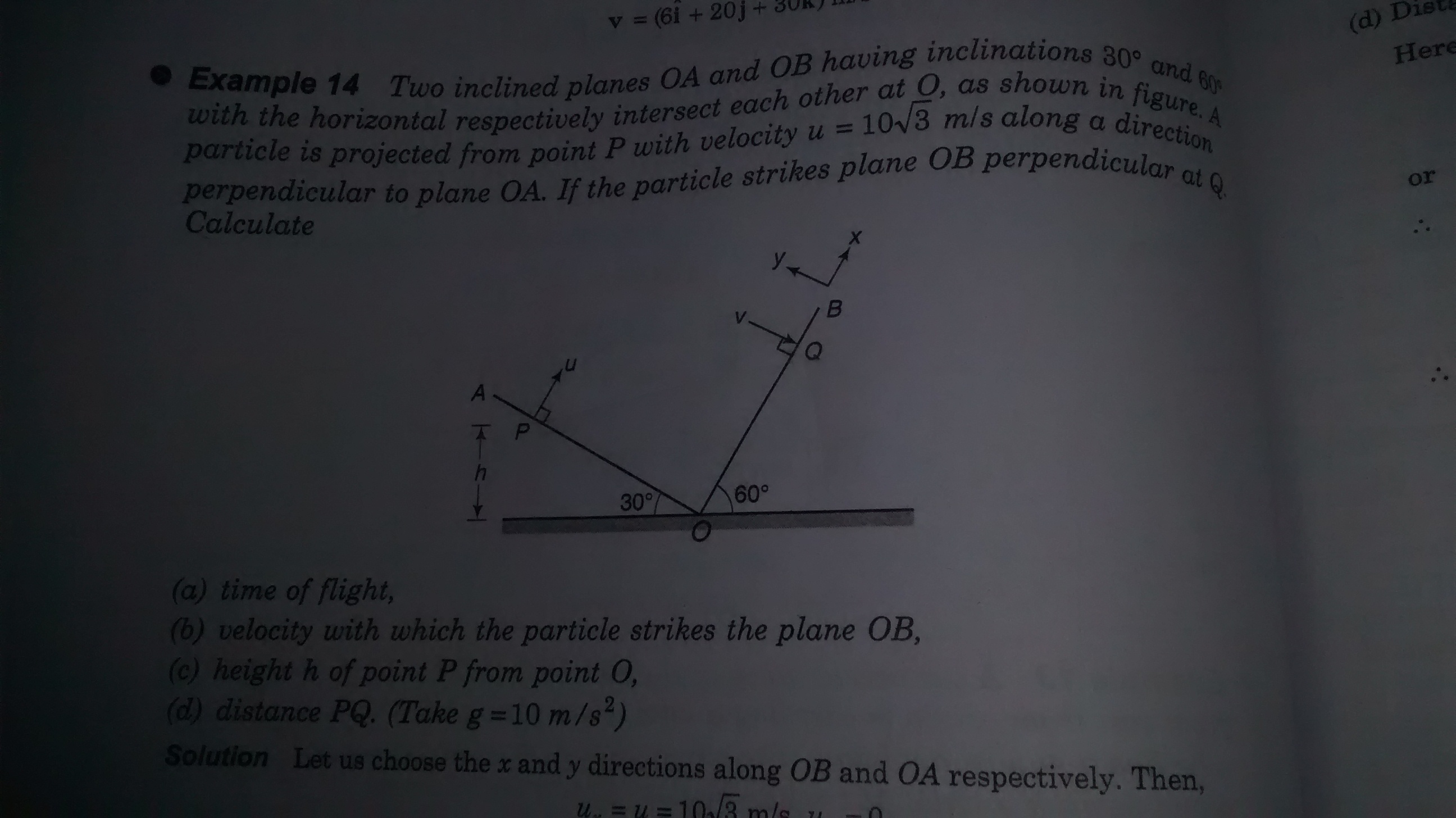
I require clear and elaborate solution for this question in a way so that I could generate concept.


 Approved Tutor Answer1 Year ago
Absolutely, I’d be happy to help you with that! Let’s dive into the topic you’re interested in and break it down step by step to ensure you grasp the concepts clearly.
To start, let’s identify the main idea behind your question. It’s essential to have a solid foundation before we delve into more complex details. Think of this as building a house; you need a strong base before adding walls and a roof.
Now, let’s dissect the components involved. For instance, if your question pertains to a scientific principle, we can look at the fundamental laws that govern it. If it’s a mathematical problem, we can analyze the formulas and theorems that apply.
Once we have a solid understanding of the components, it’s time to see how they work together. Let’s consider an example to illustrate this. If we’re discussing Newton’s laws of motion, we can look at how each law applies to everyday situations, like riding a bike or playing sports.
By relating the concepts to real-life experiences, you can better internalize the information. For instance, when you push a shopping cart, you’re experiencing Newton’s second law, which states that force equals mass times acceleration. The heavier the cart, the more force you need to apply to get it moving.
After exploring the topic, it’s beneficial to reflect on what you’ve learned. Ask yourself questions like:
This reflective practice not only reinforces your understanding but also highlights areas for further exploration. Remember, learning is a continuous journey, and each question you ask leads to deeper insights.
As you continue to explore this topic, don’t hesitate to ask more questions or seek out additional resources. Engaging with different materials, whether they be books, videos, or discussions with peers, can provide new perspectives and enhance your comprehension.
In summary, by breaking down the concepts, applying them to real-world situations, and reflecting on your learning, you can develop a robust understanding of the subject matter. Keep questioning and exploring, and you’ll find that your grasp of the material will deepen over time.

Three identical balls are placed on a frictionless
horizontal surface touching each other. They stick to
each other because of adhesive. Another ball of same
radius and mass m is placed over the void created by
the three balls. Find the forces applied by the balls
kept on the floor to each other if the system remains
in equilibrium.
Last Activity: 10 Months ago
A car loaded with water having total mass 1000 kg moves on a straight horizontal Road starting from rest under the action of a force of 100 Newton. The water spills throw a small hole in the bottom at a rate of 0.1 KG per second the velocity of cart after 300 seconds is nearly.
11
21
31
41
Last Activity: 10 Months ago
Last Activity: 3 Years ago
Last Activity: 3 Years ago