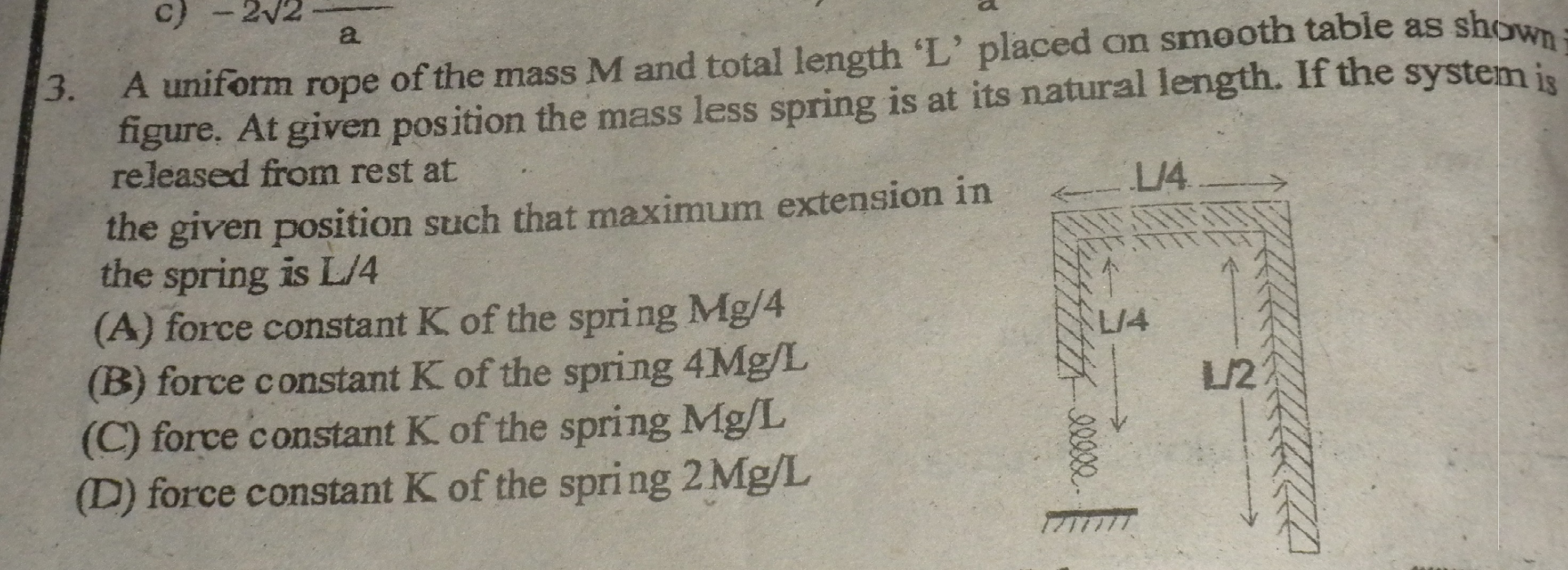
It sounds like you're feeling a bit overwhelmed with your upcoming exams, and that's completely understandable. When tackling challenging problems, especially in subjects like math or science, having a structured approach can make a significant difference. Let’s break down a general strategy that you can apply to various types of problems.
Step-by-Step Approach to Problem Solving
1. Understand the Problem
Before jumping into solving, take a moment to read the problem carefully. Identify what is being asked. Highlight or underline key information and terms. This will help you focus on the main objective.
2. Gather Relevant Information
Next, collect all the information you have. This could include formulas, definitions, or previous examples that relate to the problem. Make a list of what you know and what you need to find out.
3. Develop a Plan
Think about how you can approach the problem. Here are a few strategies:
- Break it down: If the problem is complex, try to divide it into smaller, more manageable parts.
- Use diagrams: Visual aids can help clarify relationships and processes.
- Look for patterns: Sometimes, recognizing a pattern can lead you to the solution.
4. Execute the Plan
Now it’s time to put your plan into action. Work through the problem step by step. Don’t rush; take your time to ensure each part is correct. If you get stuck, refer back to your notes or consider if there’s another way to approach it.
5. Review Your Solution
Once you arrive at a solution, take a moment to review your work. Check if your answer makes sense in the context of the problem. If possible, plug your answer back into the original question to see if it holds true.
Example Scenario
Let’s say you’re working on a math problem involving quadratic equations. Here’s how you might apply the steps:
Problem:
Solve for x in the equation: x² - 5x + 6 = 0.
1. Understand the Problem:
You need to find the values of x that satisfy this equation.
2. Gather Relevant Information:
You know that this is a quadratic equation, and you can use the quadratic formula: x = (-b ± √(b² - 4ac)) / 2a.
3. Develop a Plan:
Identify a, b, and c from the equation. Here, a = 1, b = -5, and c = 6.
4. Execute the Plan:
Plug these values into the quadratic formula:
x = (5 ± √((-5)² - 4(1)(6))) / (2(1))
x = (5 ± √(25 - 24)) / 2
x = (5 ± 1) / 2
This gives you x = 3 and x = 2.
5. Review Your Solution:
Check both values by substituting them back into the original equation to ensure they satisfy it.
Final Thoughts
By following these steps, you can systematically approach a variety of problems. Remember, practice is key, so try to work through different types of questions to build your confidence. If you have specific problems you’re struggling with, feel free to share them, and I’d be happy to help you work through those as well!