

Grade 11Mechanics
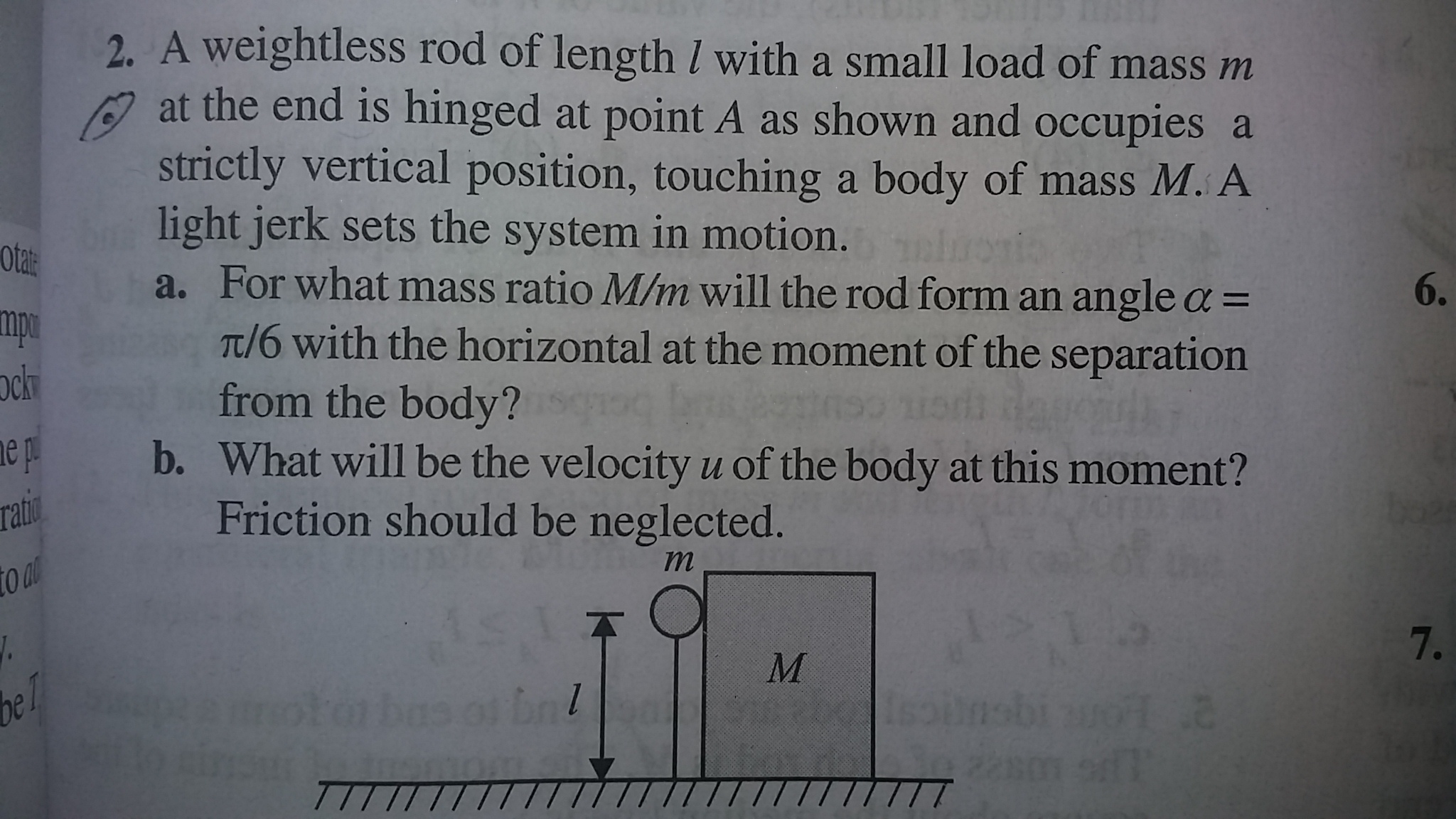
Help me solving this question in physics?? Friction is neglected everywhere.


 Approved Tutor Answer1 Year ago
When we say that friction is neglected in a physics problem, it often simplifies the analysis significantly. This means we can focus on the fundamental forces at play without the complications that friction introduces. Let’s break down how to approach a problem under these conditions.
In physics, friction is a force that opposes the motion of an object. When we ignore friction, we can analyze the motion of objects using Newton's laws of motion without considering the energy lost to frictional forces. This is particularly useful in problems involving inclined planes, pulleys, or objects in free fall.
Let’s consider a common scenario: a block sliding down an inclined plane without friction. Here’s how you would approach it:
First, determine the forces acting on the block. The primary forces are:
Next, resolve the gravitational force into two components: one parallel to the incline and one perpendicular to it. The component of gravity acting down the slope can be calculated using:
Fparallel = mg sin(θ)
where θ is the angle of the incline.
Since there’s no friction, the net force acting on the block is just the parallel component of gravity. According to Newton's second law:
Fnet = ma
Substituting the force we found:
mg sin(θ) = ma
From this, we can solve for acceleration (a):
a = g sin(θ)
With the acceleration known, you can now find other parameters such as the final velocity, distance traveled, or time taken using kinematic equations. For example, if you want to find the distance (d) traveled down the incline after a certain time (t), you can use:
d = 0.5 a t²
Imagine a block of mass 5 kg sliding down a frictionless incline of 30 degrees. To find the acceleration:
a = g sin(30°) = 9.81 m/s² * 0.5 = 4.905 m/s²
Now, if it slides for 2 seconds, the distance traveled would be:
d = 0.5 * 4.905 m/s² * (2 s)² = 19.62 m
Neglecting friction allows for a clearer understanding of the fundamental principles of motion. By focusing on the forces and applying Newton's laws, you can solve a variety of problems effectively. If you have a specific scenario or problem in mind, feel free to share, and we can work through it together!

Three identical balls are placed on a frictionless
horizontal surface touching each other. They stick to
each other because of adhesive. Another ball of same
radius and mass m is placed over the void created by
the three balls. Find the forces applied by the balls
kept on the floor to each other if the system remains
in equilibrium.
Last Activity: 10 Months ago
A car loaded with water having total mass 1000 kg moves on a straight horizontal Road starting from rest under the action of a force of 100 Newton. The water spills throw a small hole in the bottom at a rate of 0.1 KG per second the velocity of cart after 300 seconds is nearly.
11
21
31
41
Last Activity: 10 Months ago
Last Activity: 3 Years ago
Last Activity: 3 Years ago