
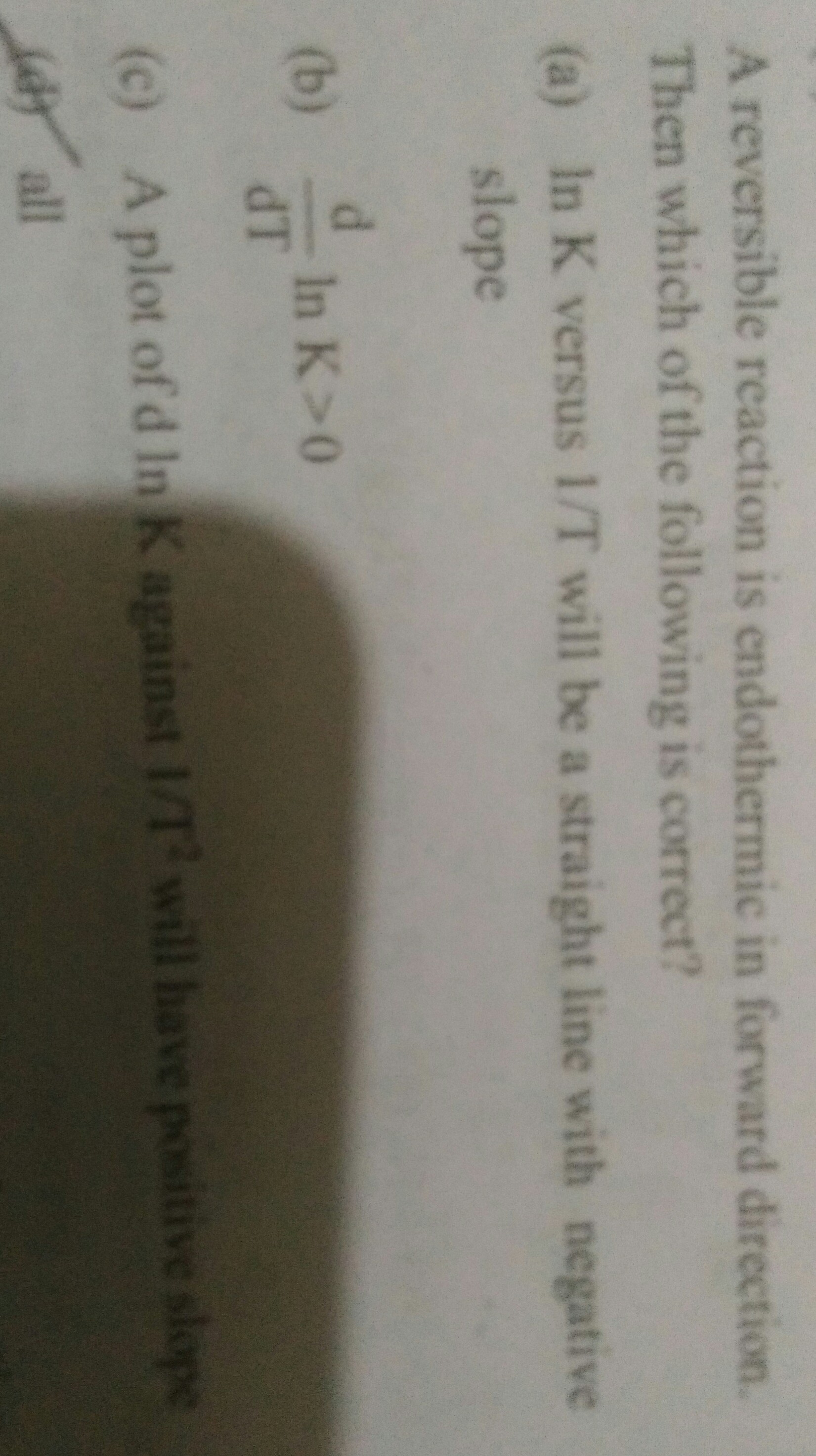
Please explain all options in image question.......).........)...#....
Please explain all options in image question.......).........)...#....

Sudhanva G V , 7 Years ago
Grade 11
 IIT JEE Entrance Exam> Please explain all options in image quest...
 1 Answers
Prepraring for the competition made easy just by live online class.

Full Live Access

Study Material

Live Doubts Solving

Daily Class Assignments

Let S={x:x belongs to R(√3+√2)^(x^2-4) - (√3-√2)^(x^2-4)=10}. Then n(S) is equal to-
Last Activity: 6 Months ago
Last Activity: 3 Years ago
Last Activity: 3 Years ago
Last Activity: 3 Years ago