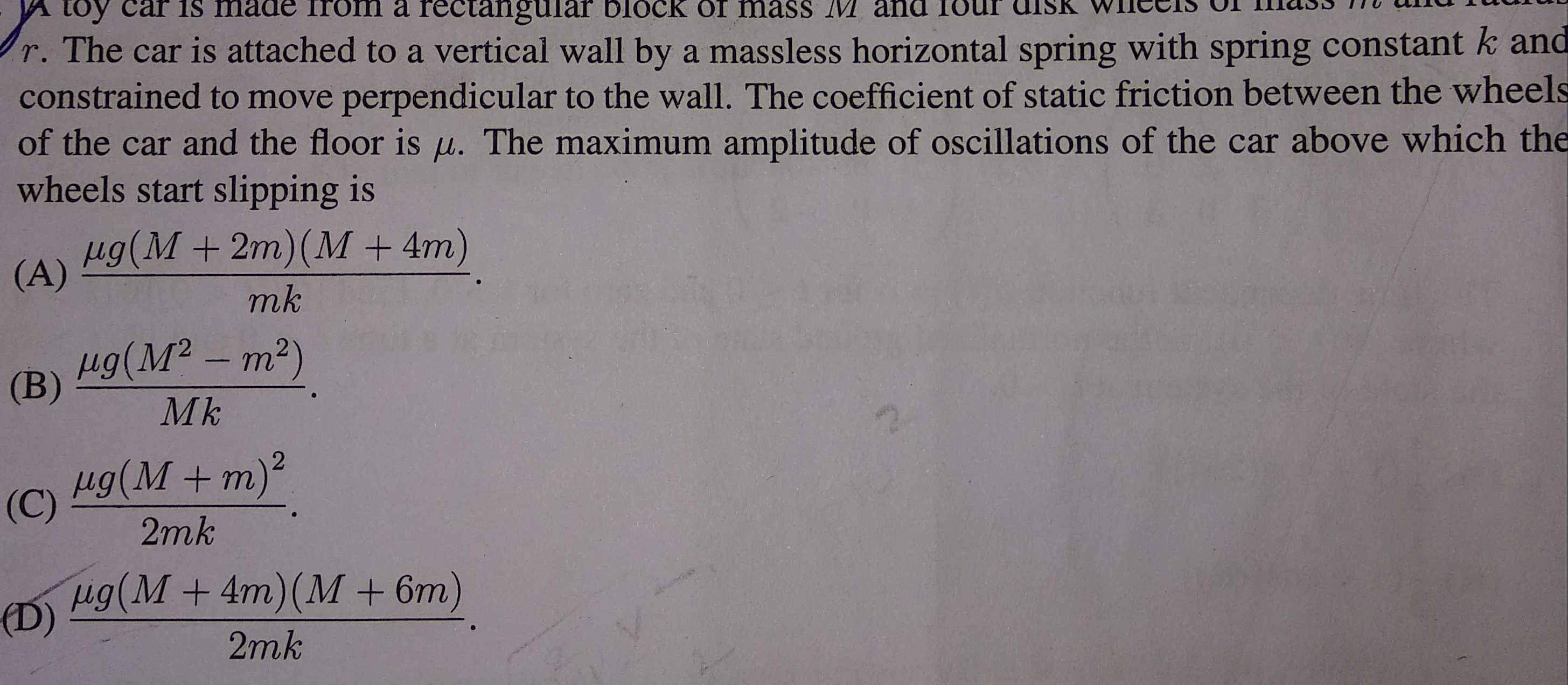
To determine the force on each wheel of a vehicle, we need to consider several factors, including the weight of the vehicle, the distribution of that weight, and any additional forces acting on the vehicle, such as acceleration or braking. Let’s break this down step by step to clarify how to calculate the force on each wheel and understand the relationship between the spring force and the forces acting on the wheels.
Understanding Forces on Wheels
When a vehicle is at rest or moving at a constant speed, the forces acting on it are balanced. The weight of the vehicle is distributed among its wheels, and each wheel supports a portion of that weight. The force on each wheel can be calculated using the following steps:
Step 1: Calculate the Total Weight
The total weight (W) of the vehicle can be calculated using the formula:
Where:
- m = mass of the vehicle (in kilograms)
- g = acceleration due to gravity (approximately 9.81 m/s²)
Step 2: Determine Weight Distribution
The total weight is distributed among the wheels. For a standard four-wheeled vehicle, the weight on each wheel can be calculated by dividing the total weight by the number of wheels, assuming even distribution:
- Force on each wheel (F_wheel) = W / 4
However, if the vehicle has a different weight distribution (for example, if it has a heavy engine in the front), you may need to adjust this calculation based on the center of gravity and the specific design of the vehicle.
Step 3: Consider Additional Forces
If the vehicle is accelerating, braking, or going uphill/downhill, additional forces come into play. For instance, during acceleration, the force on the rear wheels increases, while the front wheels may experience less force. This can be calculated using Newton's second law:
Where a is the acceleration. You would add this force to the appropriate wheels based on the direction of acceleration.
Spring Force and Its Direction
Now, regarding the spring force, which is typically associated with the vehicle's suspension system, it acts to support the weight of the vehicle and absorb shocks from the road. The spring force is indeed opposite to the force acting on the wheels. When the vehicle exerts a downward force on the wheels due to its weight, the springs compress, creating an upward spring force that counteracts this downward force.
Visualizing the Forces
Imagine a trampoline: when you jump on it, your weight pushes down, and the springs compress. The trampoline then pushes back up against you with an equal and opposite force. Similarly, in a vehicle, as the wheels push down due to the weight of the vehicle, the springs push back up, maintaining balance and stability.
Summary of Key Points
- Calculate the total weight of the vehicle using its mass and gravity.
- Distribute this weight among the wheels, adjusting for any uneven weight distribution.
- Account for additional forces due to acceleration, braking, or inclines.
- Understand that the spring force acts in the opposite direction to the force on the wheels, providing support and stability.
By following these steps, you can effectively calculate the forces acting on each wheel and understand the dynamics of the vehicle's suspension system. If you have any more questions or need further clarification, feel free to ask!