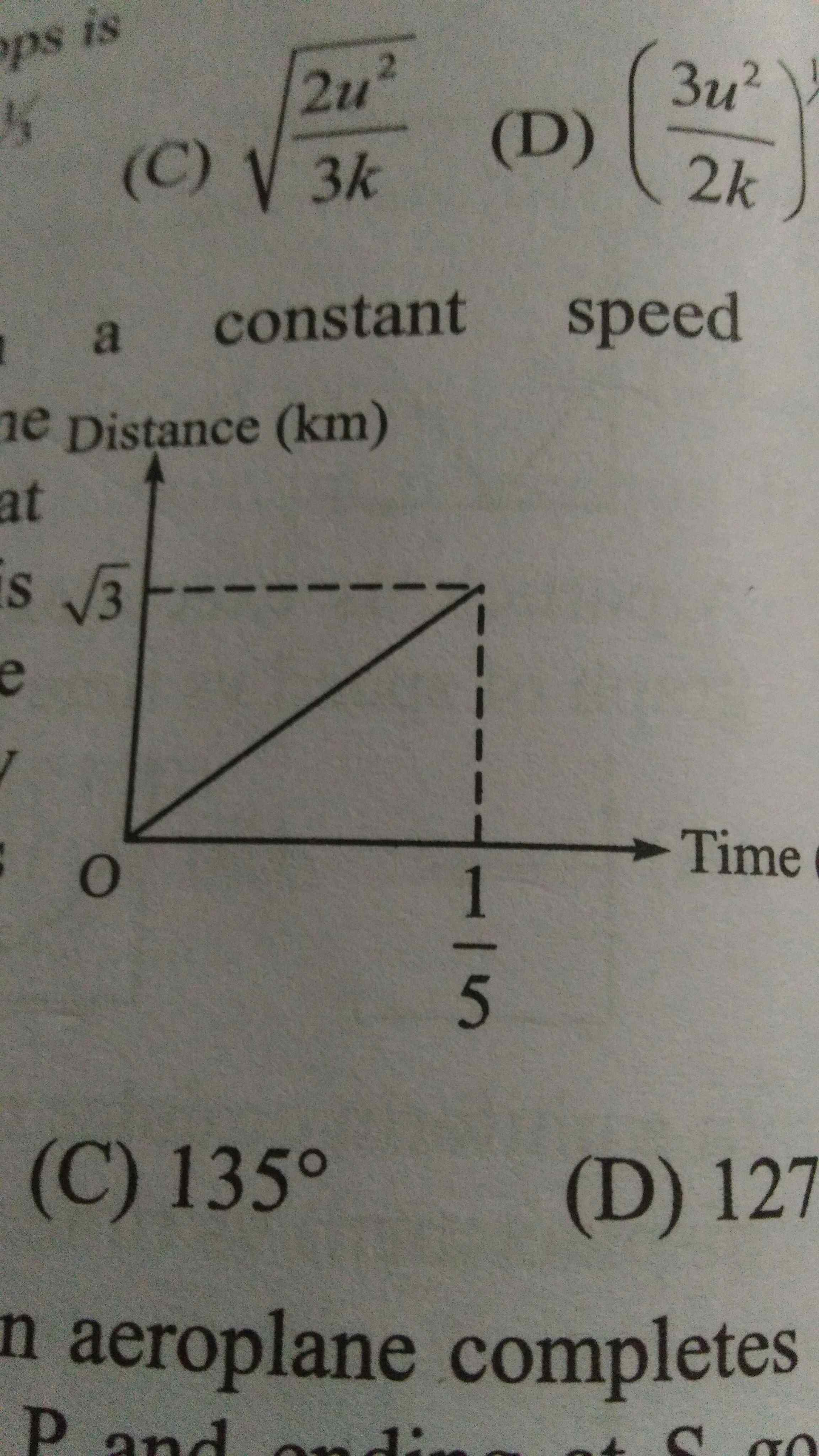
To solve this problem, we need to analyze the situation involving the river's flow and the person's crossing. The key here is to understand the relationship between the velocity of the river and the velocity of the person crossing it. Let's break it down step by step.
Understanding Velocity Components
The river flows at a constant speed of 5 km/h. When a person crosses the river, their velocity relative to the ground is a combination of their velocity across the river and the velocity of the river itself. This creates a resultant velocity vector that can be analyzed using vector addition.
Setting Up the Problem
Let's denote:
- Vr = velocity of the river = 5 km/h (in the horizontal direction)
- Vp = velocity of the person (unknown direction and magnitude)
The angle between the person's velocity vector and the river's flow is what we need to determine. The problem states that the angle is either 150°, 120°, 135°, or 127°.
Using Trigonometry
To find the angle, we can use the concept of vector components. If we assume the person is crossing directly perpendicular to the riverbank, their velocity vector would be vertical. However, due to the river's current, the actual path taken will be diagonal. The angle formed with the river's flow can be calculated using trigonometric functions.
Calculating the Angle
We can use the tangent function, which relates the opposite side to the adjacent side in a right triangle. In this case:
- The opposite side is the velocity of the person (Vp).
- The adjacent side is the velocity of the river (Vr).
The tangent of the angle θ (the angle between the person's velocity and the river's flow) can be expressed as:
tan(θ) = Vp / Vr
To find θ, we can rearrange this to:
θ = arctan(Vp / Vr)
Determining the Correct Angle
Now, we need to consider the possible angles given in the options. Since the river flows horizontally, if the person is crossing directly, the angle with respect to the river's flow will be less than 180°. The angles provided are:
- A) 150°
- B) 120°
- C) 135°
- D) 127°
Given that the angle must be acute or obtuse but less than 180°, we can eliminate 150° as it suggests a backward direction relative to the flow. The remaining angles are 120°, 135°, and 127°.
Final Analysis
To determine which angle is correct, we need to consider the typical behavior of a person crossing a river. If they swim at an angle upstream to counteract the current, the angle will be more than 90° but less than 180°. The most reasonable angle that fits this scenario, considering the flow of the river and the need to swim against it, would be 135°.
Thus, the angle between the direction of the person's velocity relative to the water and the direction of the river flow is:
C) 135°