

Grade 12General Physics
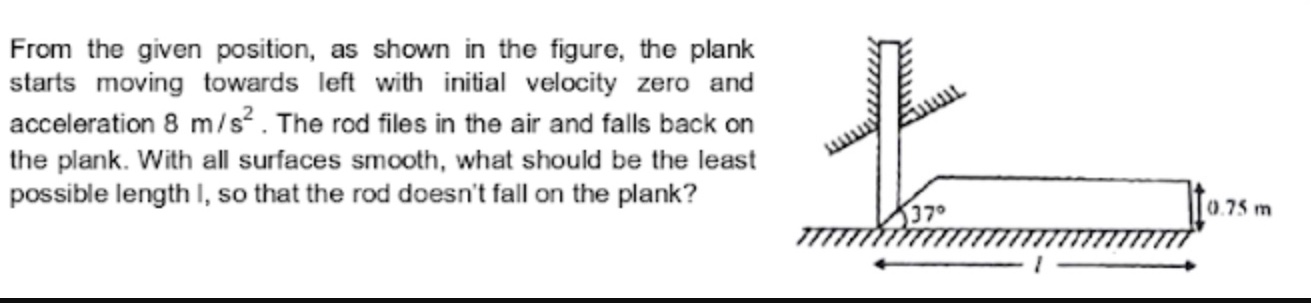
from the given positon as shown in the figure....refer the image for the remaing question
from the given positon as shown in the figure....refer the image for the remaing question


 Approved Tutor Answer0 Years ago
It seems like you're referencing a specific figure or image that provides context for your question. Since I can't see images, let’s approach this by discussing how to analyze a problem based on a given position, which is often common in subjects like physics or mathematics. If you can describe the figure or the details of the question, I can provide a more tailored response. For now, let’s break down the general steps you might take to solve a problem involving a position in a diagram.
When you're given a position in a figure, whether it's related to physics, geometry, or another subject, there are several key steps to follow:
Start by identifying the important components of the figure. This could include:
Next, consider what the problem is asking. Are you calculating distance, force, or perhaps the angle between two lines? Understanding the context will guide your approach.
Once you know what you need to find, apply the appropriate formulas. For instance:
Break down the problem into manageable steps. If you're calculating a distance, for example, plug in the coordinates of the points you identified earlier into the distance formula. Make sure to keep track of your units!
Finally, after arriving at an answer, it’s crucial to check your work. Does your answer make sense in the context of the problem? If you calculated a distance, is it reasonable given the positions of the points?
Let’s say you have a figure showing two points, A(2, 3) and B(5, 7). You need to find the distance between these two points. Here’s how you would proceed:
By following these steps, you can systematically tackle problems related to positions in diagrams. If you can provide more details about the specific question or figure, I’d be happy to help you further!

In viewing through a magnifying glass, one usually positions one's eyes very close to the lens. Does angular magnification change if the eye is moved back?
Last Activity: 9 Months ago
Last Activity: 3 Years ago
Last Activity: 3 Years ago
Last Activity: 3 Years ago
Last Activity: 3 Years ago