

Grade 12th passEngineering Entrance Exams
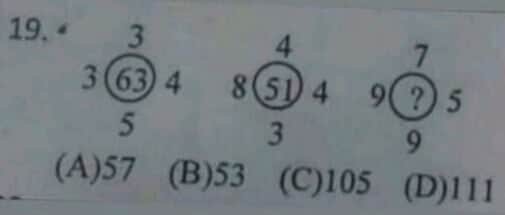
Please solve this question what is the answer in this box with explain.
Please solve this question what is the answer in this box with explain.


 Approved Tutor Answer11 Months ago
To provide a clear and thorough answer, I need to know the specific question or problem you're referring to. If you could share the details of the question or the context surrounding it, I would be happy to help you solve it and explain the reasoning behind the answer.
Once you provide the question, the first step is to break it down into manageable parts. This often involves identifying what is being asked, the relevant information given, and any specific requirements or constraints. For example, if the question is mathematical, we would look for numbers, operations, and what the final answer should represent.
Next, we would analyze the information provided. This could involve looking for patterns, relationships, or applying relevant formulas. For instance, if the question involves geometry, we might need to recall the properties of shapes or theorems that apply to the situation.
After analyzing the information, we would apply logical steps to arrive at the solution. This might include calculations, drawing diagrams, or even writing out equations. Each step should build on the previous one, leading us closer to the answer.
To make the explanation clearer, using examples can be very effective. For instance, if the question involves solving for x in an equation, we could demonstrate this with a simple equation like 2x + 3 = 7. We would isolate x by subtracting 3 from both sides and then dividing by 2, showing each step clearly.
Once we arrive at the answer, it's important to check our work. This could involve substituting the answer back into the original question to ensure it makes sense. If everything checks out, we can confidently present the answer.
Feel free to share the specific question you have in mind, and I’ll guide you through the solution process step by step. Engaging with the material and asking questions is a great way to deepen your understanding!

Last Activity: 4 Years ago
Last Activity: 4 Years ago
Last Activity: 4 Years ago
Last Activity: 4 Years ago