Grade 11Electric Current
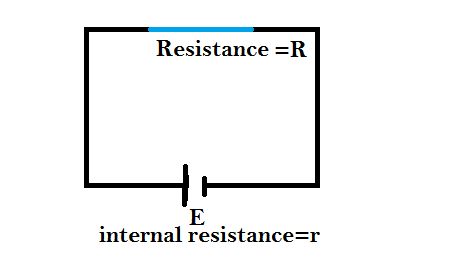
SEE THE ATTACHMENTAccording to the formula V=E-Ir (E is the emf of cell with internal resistance r), we say that whenever we increase the current there is decrease in potential difference and vice versa.BUT THERE IS A TANGLED DOUBT IN MY MINDV=E-IrV+Ir= EIR+Ir=ELet we increase the current I somehow (by increasing the frequency of electrons) to I’ such that I’>IBut since current remain same in series. The result will be like…I’R + I’r= EV+I’r=EV=E-I’rBut V=I’R which increased rather than decreasingWhich is not possibleMY VIEWSI think V=E-IrI1R=E-I2rI1R=E+(-I2r)I1 is the current flowing through the wire while I2 is the current flowing inside the cell which is moving in the opposite direction (i.e. negative to positive) We actually alter the amount of current inside the cell by some special method which results to the change in overall voltage of the cell.AM I RIGHT?. IF WRONG PLEASE PUT UP YOUR VIEWS.
SEE THE ATTACHMENT
According to the formula V=E-Ir (E is the emf of cell with internal resistance r), we say that whenever we increase the current there is decrease in potential difference and vice versa.
BUT THERE IS A TANGLED DOUBT IN MY MIND
V=E-Ir
V+Ir= E
IR+Ir=E
Let we increase the current I somehow (by increasing the frequency of electrons) to I’ such that I’>I
But since current remain same in series. The result will be like…
I’R + I’r= E
V+I’r=E
V=E-I’r
But V=I’R which increased rather than decreasing
Which is not possible
MY VIEWS
I think V=E-Ir
I1R=E-I2r
I1R=E+(-I2r)
I1 is the current flowing through the wire while I2 is the current flowing inside the cell which is moving in the opposite direction (i.e. negative to positive)
We actually alter the amount of current inside the cell by some special method which results to the change in overall voltage of the cell.
AM I RIGHT?. IF WRONG PLEASE PUT UP YOUR VIEWS.