

Grade 12Algebra
Unable to solve this , any ideas? Getting infinite terms of 1/18.
Unable to solve this , any ideas? Getting infinite terms of 1/18.
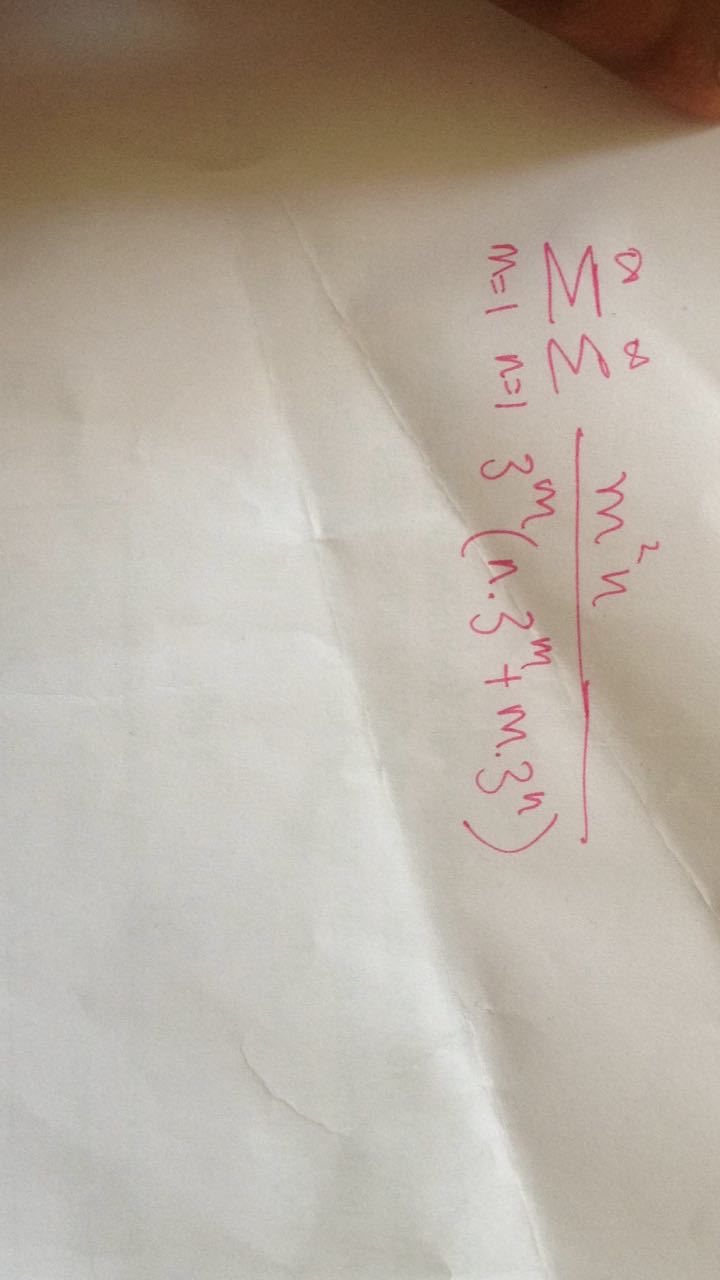



 Approved Tutor Answer1 Year ago
It sounds like you're dealing with a mathematical problem that involves an infinite series or sequence, specifically one that converges to a value of 1/18. Let's break this down step by step to understand what might be happening and how to approach it.
An infinite series is the sum of the terms of an infinite sequence. When you mention "infinite terms of 1/18," it suggests that you might be looking at a series that either converges to this value or has terms that repeat or approach this value indefinitely.
First, we need to identify the nature of the series you are working with. Common types of series include:
For example, a geometric series can be expressed as:
S = a + ar + ar² + ar³ + ...
where a is the first term and r is the common ratio. If the absolute value of r is less than 1, this series converges to:
S = a / (1 - r)
If your series is converging to 1/18, you might want to check the parameters of your series. For instance, if you have a geometric series where:
a = 1/18 and r = 1/2,
the series would look like:
S = (1/18) + (1/36) + (1/72) + ...
This series converges to:
S = (1/18) / (1 - 1/2) = (1/18) / (1/2) = 1/9
So, if you're getting infinite terms of 1/18, it might be that your series is structured in a way that each term approaches this value, or you might be summing terms that are consistently equal to 1/18.
Here are a few things to consider if you're stuck:
Let’s say you have a series defined by:
a_n = 1/18 for all n. This means every term is simply 1/18. In this case, the series would diverge because you would be summing an infinite number of terms that are all equal to 1/18, leading to an infinite sum.
On the other hand, if your series has terms that decrease in value and approach 1/18, such as:
a_n = 1/(18n),
this series converges to 0 as n approaches infinity, but the individual terms are getting smaller and smaller.
By clarifying the structure of your series and applying the appropriate mathematical principles, you should be able to resolve the issue. If you have more details about the specific series or terms you're working with, feel free to share, and we can dive deeper into it together!

Last Activity: 2 Years ago