

Grade 11Algebra
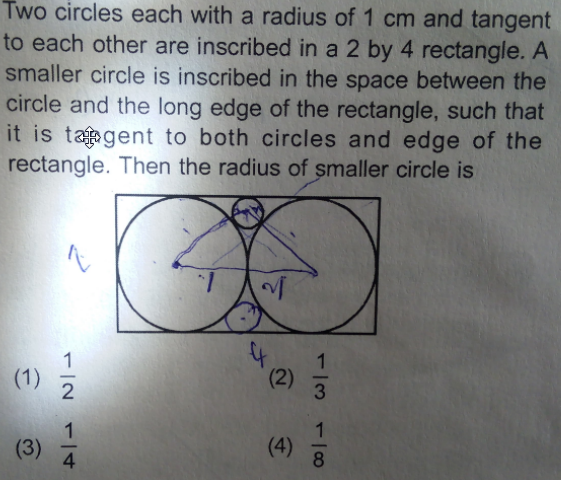
please solve and answer quickly ….it is of circle chapter.
please solve and answer quickly ….
it is of circle chapter.


 Approved Tutor Answer1 Year ago
Let's dive into the topic of circles! If you have a specific problem or question related to circles, please share it, and I'll be happy to help you solve it. In the meantime, I can provide an overview of some key concepts related to circles, which might be useful.
A circle is a simple shape in geometry defined as the set of all points in a plane that are equidistant from a fixed point called the center. The distance from the center to any point on the circle is known as the radius.
Let’s say you need to find the circumference and area of a circle with a radius of 5 units. Here’s how you would do it:
Using the formula for circumference:
C = 2πr
Substituting the radius:
C = 2π(5) = 10π
So, the circumference is approximately 31.42 units (using π ≈ 3.14).
Now, let’s find the area using the area formula:
A = πr²
Substituting the radius:
A = π(5)² = 25π
This gives us an area of approximately 78.54 square units.
Understanding circles is not just about solving problems in a textbook. Circles appear in various real-world contexts, such as:
Feel free to ask if you have a specific problem or concept in mind related to circles, and I can provide more tailored assistance!

Last Activity: 2 Years ago